- Sort Score
- Num 10 results
- Language All
Results 321 - 330 of 1,127 for want (0.03 seconds)
-
helm-releases/minio-5.0.9.tgz
version in a live release. Assuming your release is named as `my-release`, get the values using the command: ```bash helm get values my-release > old_values.yaml ``` Then change the field `image.tag` in `old_values.yaml` file with MinIO image tag you want to use. Now update the chart using ```bash helm upgrade -f old_values.yaml my-release minio/minio ``` Default upgrade strategies are specified in the `values.yaml` file. Update these fields if you'd like to use a different strategy. ### Configuration...
Created: Sun Apr 05 19:28:12 GMT 2026 - Last Modified: Wed May 03 06:23:26 GMT 2023 - 20.2K bytes - Click Count (0) -
helm-releases/minio-5.0.2.tgz
version in a live release. Assuming your release is named as `my-release`, get the values using the command: ```bash helm get values my-release > old_values.yaml ``` Then change the field `image.tag` in `old_values.yaml` file with MinIO image tag you want to use. Now update the chart using ```bash helm upgrade -f old_values.yaml my-release minio/minio ``` Default upgrade strategies are specified in the `values.yaml` file. Update these fields if you'd like to use a different strategy. ### Configuration...
Created: Sun Apr 05 19:28:12 GMT 2026 - Last Modified: Sun Dec 18 07:57:10 GMT 2022 - 20.4K bytes - Click Count (0) -
helm-releases/minio-5.0.8.tgz
version in a live release. Assuming your release is named as `my-release`, get the values using the command: ```bash helm get values my-release > old_values.yaml ``` Then change the field `image.tag` in `old_values.yaml` file with MinIO image tag you want to use. Now update the chart using ```bash helm upgrade -f old_values.yaml my-release minio/minio ``` Default upgrade strategies are specified in the `values.yaml` file. Update these fields if you'd like to use a different strategy. ### Configuration...
Created: Sun Apr 05 19:28:12 GMT 2026 - Last Modified: Thu Apr 13 21:49:51 GMT 2023 - 20.3K bytes - Click Count (0) -
benchmarks/src/main/java/org/elasticsearch/benchmark/routing/allocation/AllocationBenchmark.java
    // we cannot use individual @Params as some will lead to invalid combinations which do not let the benchmark terminate. JMH offers no
    // support to constrain the combinations of benchmark parameters and we do not want to rely on OptionsBuilder as each benchmark would
    // need its own main method and we cannot execute more than one class with a main method per JAR.
    @Param(
        {
            // indices| shards| replicas| nodes
Created: Wed Apr 08 16:19:15 GMT 2026 - Last Modified: Tue Apr 13 08:33:41 GMT 2021 - 6.7K bytes - Click Count (0) -
android/guava/src/com/google/common/util/concurrent/FluentFuture.java
 * </h4>
 *
 * <p>Users of {@code CompletableFuture} will likely want to continue using {@code
 * CompletableFuture}. {@code FluentFuture} is targeted at people who use {@code ListenableFuture},
 * who can't use Java 8, or who want an API more focused than {@code CompletableFuture}. (If you
 * need to adapt between {@code CompletableFuture} and {@code ListenableFuture}, consider <a
Created: Fri Apr 03 12:43:13 GMT 2026 - Last Modified: Mon Feb 23 19:19:10 GMT 2026 - 19.8K bytes - Click Count (0) -
guava/src/com/google/common/collect/RegularImmutableMap.java
        table[tableIndex] = effectiveEntry;
      } else {
        // We already saw this key, and the first value we saw (going backwards) is the one we are
        // keeping. So we won't touch table[], but we do still want to add the existing entry that
        // we found to entries[] so that we will see this key in the right place when iterating.
        if (duplicates == null) {
          duplicates = new IdentityHashMap<>();
        }
Created: Fri Apr 03 12:43:13 GMT 2026 - Last Modified: Fri Dec 26 20:08:09 GMT 2025 - 15.7K bytes - Click Count (0) -
android/guava/src/com/google/common/base/StandardSystemProperty.java
Created: Fri Apr 03 12:43:13 GMT 2026 - Last Modified: Thu Mar 06 10:03:30 GMT 2025 - 4.9K bytes - Click Count (0) -
okhttp/src/androidMain/kotlin/okhttp3/internal/platform/AndroidPlatform.kt
  override fun buildTrustRootIndex(trustManager: X509TrustManager): TrustRootIndex =
    try {
      StrictMode.noteSlowCall("buildTrustRootIndex")

      // From org.conscrypt.TrustManagerImpl, we want the method with this signature:
      // private TrustAnchor findTrustAnchorByIssuerAndSignature(X509Certificate lastCert);
      val method =
        trustManager.javaClass.getDeclaredMethod(
Created: Fri Apr 03 11:42:14 GMT 2026 - Last Modified: Fri Oct 10 05:19:46 GMT 2025 - 6.5K bytes - Click Count (0) -
docs/en/docs/advanced/response-directly.md
Now, let's see how you could use that to return a custom response.

Let's say that you want to return an [XML](https://en.wikipedia.org/wiki/XML) response.

You could put your XML content in a string, put that in a `Response`, and return it:

{* ../../docs_src/response_directly/tutorial002_py310.py hl[1,18] *}
Created: Sun Apr 05 07:19:11 GMT 2026 - Last Modified: Thu Mar 05 18:13:19 GMT 2026 - 4K bytes - Click Count (0) -
docs/federation/lookup/README.md
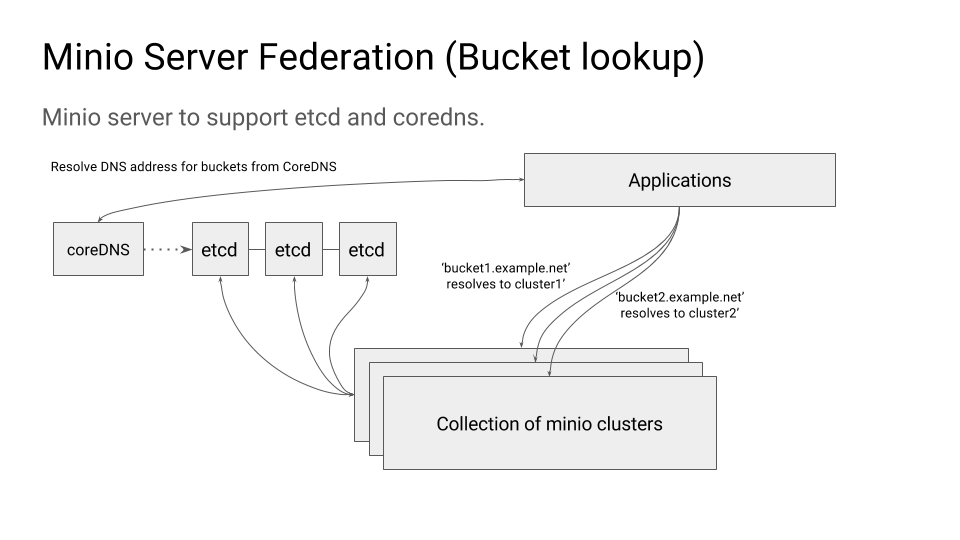 ### Environment variables #### MINIO_ETCD_ENDPOINTS This is comma separated list of etcd servers that you want to use as the MinIO federation back-end. This should be same across the federated deployment, i.e. all the MinIO instances within a federated deployment should use same etcd back-end. #### MINIO_DOMAIN
Created: Sun Apr 05 19:28:12 GMT 2026 - Last Modified: Tue Aug 12 18:20:36 GMT 2025 - 4.2K bytes - Click Count (0)