- Sort Score
- Num 10 results
- Language All
Results 121 - 130 of 167 for alaska (0.04 seconds)
-
docs/tr/docs/advanced/path-operation-advanced-configuration.md
{* ../../docs_src/path_operation_advanced_configuration/tutorial007_py310.py hl[24:31] *}

/// tip | İpucu

Burada aynı Pydantic modeli tekrar kullanıyoruz.

Aynı şekilde, başka bir yöntemle de doğrulama yapabilirdik.
Created: Sun Apr 05 07:19:11 GMT 2026 - Last Modified: Fri Mar 20 07:53:17 GMT 2026 - 7.5K bytes - Click Count (0) -
docs/tr/docs/environment-variables.md
$ echo "Hello $Env:MY_NAME"

Hello Wade Wilson
```

</div>

////

## Python’da Env Var Okuma { #read-env-vars-in-python }

Ortam değişkenlerini Python’un **dışında** (terminalde veya başka bir yöntemle) oluşturup daha sonra **Python’da okuyabilirsiniz**.

Örneğin `main.py` adında bir dosyanız şöyle olabilir:

```Python hl_lines="3"
import os

name = os.getenv("MY_NAME", "World")
Created: Sun Apr 05 07:19:11 GMT 2026 - Last Modified: Fri Mar 20 07:53:17 GMT 2026 - 8.2K bytes - Click Count (0) -
pyproject.toml
    "pyyaml >=5.3.1,<7.0.0",
    "smokeshow >=0.5.0",
]
tests = [
    { include-group = "docs-tests" },
    "anyio[trio] >=3.2.1,<5.0.0",
    "coverage[toml] >=7.13,<8.0",
    "dirty-equals >=0.9.0",
    "flask >=3.0.0,<4.0.0",
    "inline-snapshot >=0.21.1",
    "mypy >=1.14.1",
    "pwdlib[argon2] >=0.2.1",
    "pyjwt >=2.9.0",
    "pytest >=9.0.0",
    "pytest-codspeed >=4.2.0",
    "pyyaml >=5.3.1,<7.0.0",
Created: Sun Apr 05 07:19:11 GMT 2026 - Last Modified: Mon Mar 23 12:36:49 GMT 2026 - 10.3K bytes - Click Count (0) -
docs/tr/docs/tutorial/extra-models.md
UserInDB(**user_in.model_dump())
```

...çünkü `user_in.model_dump()` bir `dict` döndürür ve biz de bunu `UserInDB`'ye `**` önekiyle vererek Python'ın "unpack" etmesini sağlarız.

Böylece, bir Pydantic modelindeki verilerden başka bir Pydantic model üretmiş oluruz.

#### Bir `dict`'i Unpack Etmek ve Ek Keyword'ler { #unpacking-a-dict-and-extra-keywords }

Sonrasında, aşağıdaki gibi ek keyword argümanı `hashed_password=hashed_password` eklemek:
Created: Sun Apr 05 07:19:11 GMT 2026 - Last Modified: Fri Mar 20 07:53:17 GMT 2026 - 7.4K bytes - Click Count (0) -
src/main/resources/fess_message_pl.properties
# ========================================================================================
# Framework Default
# =================
# ----------------------------------------------------------
# Lasta Taglib
# ------------
errors.header = <ul class="has-error">
errors.footer = </ul>
errors.prefix = <li><i class="fa fa-exclamation-circle"></i>
errors.suffix = </li>
# ----------------------------------------------------------
# Javax Validator
Created: Tue Mar 31 13:07:34 GMT 2026 - Last Modified: Sat Mar 28 06:59:19 GMT 2026 - 13.4K bytes - Click Count (0) -
docs/tr/docs/index.md
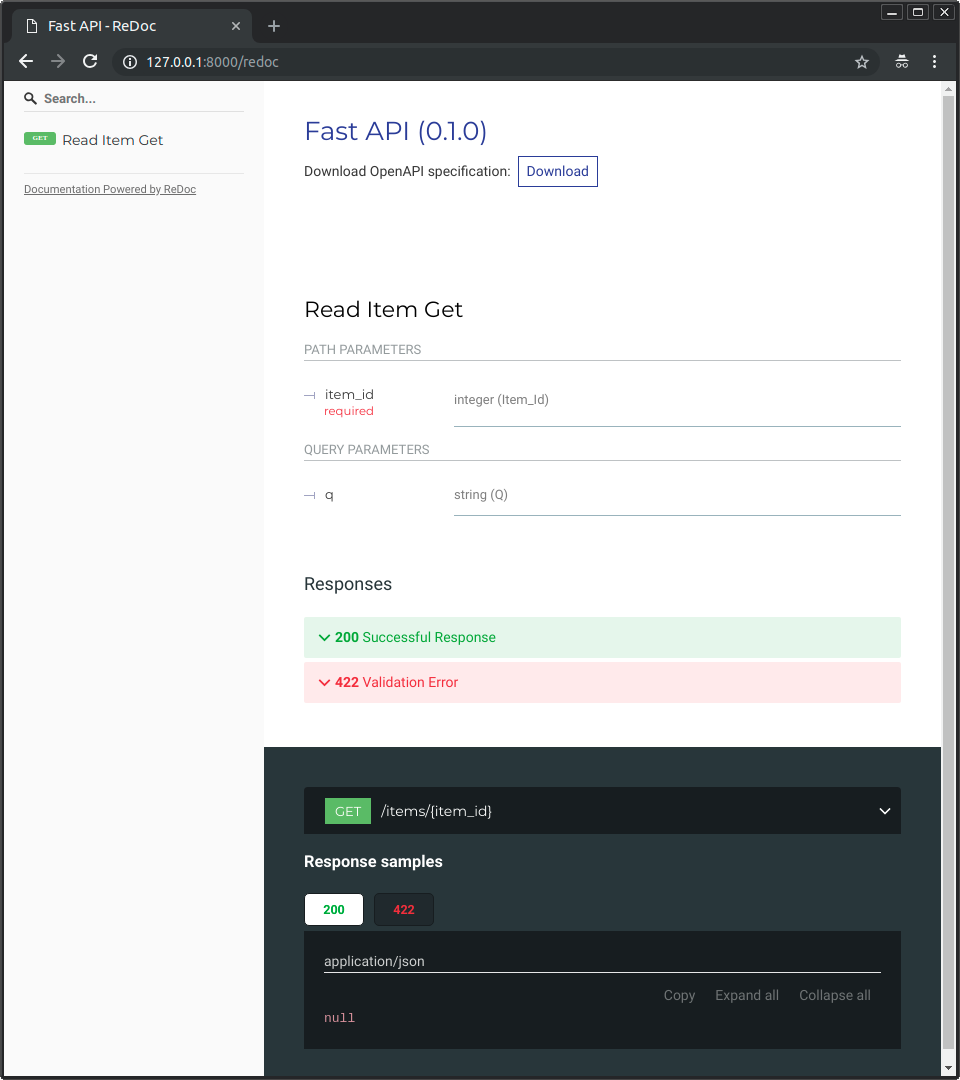 ## Örneği Güncelleyelim { #example-upgrade } Şimdi `main.py` dosyasını, `PUT` request'iyle gelen bir body alacak şekilde değiştirelim. Body'yi Pydantic sayesinde standart Python tiplerini kullanarak tanımlayalım. ```Python hl_lines="2 7-10 23-25" from fastapi import FastAPI from pydantic import BaseModelCreated: Sun Apr 05 07:19:11 GMT 2026 - Last Modified: Fri Mar 20 07:53:17 GMT 2026 - 23.2K bytes - Click Count (0) -
docs/zh-hant/docs/tutorial/bigger-applications.md
# 更大型的應用程式 - 多個檔案 { #bigger-applications-multiple-files }

如果你正在建置一個應用程式或 Web API,很少會把所有東西都放在單一檔案裡。

FastAPI 提供了一個方便的工具,讓你在維持彈性的同時,幫你組織應用程式的結構。

/// info | 資訊

如果你來自 Flask,這相當於 Flask 的 Blueprints。

///

## 範例檔案結構 { #an-example-file-structure }

假設你有如下的檔案結構:

```
.
├── app
│   ├── __init__.py
│   ├── main.py
│   ├── dependencies.py
│   └── routers
│   │   ├── __init__.py
│   │   ├── items.py
Created: Sun Apr 05 07:19:11 GMT 2026 - Last Modified: Fri Mar 20 17:05:38 GMT 2026 - 18.7K bytes - Click Count (0) -
docs/fr/docs/tutorial/bigger-applications.md
**FastAPI** fournit un outil pratique pour structurer votre application tout en conservant toute la flexibilité.

/// info

Si vous venez de Flask, cela équivaut aux Blueprints de Flask.

///

## Exemple de structure de fichiers { #an-example-file-structure }

Supposons que vous ayez une structure de fichiers comme ceci :

```
.
├── app
│   ├── __init__.py
Created: Sun Apr 05 07:19:11 GMT 2026 - Last Modified: Thu Mar 19 18:37:13 GMT 2026 - 21.4K bytes - Click Count (0) -
docs/es/docs/tutorial/bigger-applications.md
**FastAPI** proporciona una herramienta conveniente para estructurar tu aplicación manteniendo toda la flexibilidad.

/// info | Información

Si vienes de Flask, esto sería el equivalente a los Blueprints de Flask.

///

## Un ejemplo de estructura de archivos { #an-example-file-structure }

Digamos que tienes una estructura de archivos como esta:

```
.
├── app
│   ├── __init__.py
Created: Sun Apr 05 07:19:11 GMT 2026 - Last Modified: Thu Mar 19 18:15:55 GMT 2026 - 20.2K bytes - Click Count (0) -
docs/pt/docs/tutorial/bigger-applications.md
**FastAPI** oferece uma ferramenta conveniente para estruturar sua aplicação, mantendo toda a flexibilidade.

/// info | Informação

Se você vem do Flask, isso seria o equivalente aos Blueprints do Flask.

///

## Um exemplo de estrutura de arquivos { #an-example-file-structure }

Digamos que você tenha uma estrutura de arquivos como esta:

```
.
├── app
│   ├── __init__.py
Created: Sun Apr 05 07:19:11 GMT 2026 - Last Modified: Thu Mar 19 18:20:43 GMT 2026 - 20.3K bytes - Click Count (0)