- Sort Score
- Num 10 results
- Language All
Results 251 - 260 of 1,087 for Socket (0.04 seconds)
-
cmd/bucket-replication-metrics.go
			atomic.AddUint64(&p.srProxyStats.GetFailedTotal, 1)
		}
	default:
		return
	}
	p.bucketStats[bucket] = v
}

func (p *proxyStatsCache) getBucketStats(bucket string) ProxyMetric {
	p.RLock()
	defer p.RUnlock()
	v, ok := p.bucketStats[bucket]

	if !ok {
		return ProxyMetric{}
	}
	return ProxyMetric{
		PutTagTotal: atomic.LoadUint64(&v.PutTagTotal),
Created: Sun Apr 05 19:28:12 GMT 2026 - Last Modified: Thu Aug 15 12:04:40 GMT 2024 - 14.2K bytes - Click Count (0) -
cmd/bucket-lifecycle-handlers_test.go
}

// Test S3 Bucket lifecycle APIs
func TestBucketLifecycle(t *testing.T) {
	ExecObjectLayerAPITest(ExecObjectLayerAPITestArgs{t: t, objAPITest: testBucketLifecycleHandlers, endpoints: []string{"GetBucketLifecycle", "PutBucketLifecycle", "DeleteBucketLifecycle"}})
}

// Simple tests of bucket lifecycle: PUT, GET, DELETE.
// Tests are related and the order is important.
Created: Sun Apr 05 19:28:12 GMT 2026 - Last Modified: Mon Jun 10 15:50:49 GMT 2024 - 11.3K bytes - Click Count (0) -
.github/workflows/multipart/docker-compose-site1.yaml
x-minio-common: &minio-common
  image: quay.io/minio/minio:${RELEASE}
  command: server http://site1-minio{1...4}/data{1...2}
  environment:
    - MINIO_PROMETHEUS_AUTH_TYPE=public
    - CI=true

# starts 4 docker containers running minio server instances.
# using nginx reverse proxy, load balancing, you can access
# it through port 9000.
services:
  site1-minio1:
    <<: *minio-common
    hostname: site1-minio1
    volumes:
Created: Sun Apr 05 19:28:12 GMT 2026 - Last Modified: Sat Sep 30 10:13:56 GMT 2023 - 1.5K bytes - Click Count (0) -
cmd/metrics-v3-bucket-replication.go
	}

	bucketReplStats := globalReplicationStats.Load().getAllLatest(dataUsageInfo.BucketsUsage)
	for _, bucket := range buckets {
		if s, ok := bucketReplStats[bucket]; ok {
			stats := s.ReplicationStats
			if stats.hasReplicationUsage() {
				for arn, stat := range stats.Stats {
					labels := []string{bucketL, bucket, targetArnL, arn}
					m.Set(bucketReplLastHrFailedBytes, float64(stat.Failed.LastHour.Bytes), labels...)
Created: Sun Apr 05 19:28:12 GMT 2026 - Last Modified: Wed Jun 04 20:45:31 GMT 2025 - 8.3K bytes - Click Count (0) -
docs/resiliency/resiliency-tests.sh
TESTS_RUN_STATUS=1

function cleanup() {
	echo "Cleaning up MinIO deployment"
	docker compose -f "${DOCKER_COMPOSE_FILE}" down --volumes
	for container in $(docker ps -q); do
		echo Removing docker $container
		docker rm -f $container >/dev/null 2>&1
		docker wait $container
	done
}

function cleanup_and_prune() {
	cleanup
	docker system prune --volumes --force
	docker image prune --all --force
}

function verify_resiliency() {
Created: Sun Apr 05 19:28:12 GMT 2026 - Last Modified: Sat Dec 21 04:24:45 GMT 2024 - 20.5K bytes - Click Count (0) -
docs/distributed/iam-import-with-openid.sh
if [ "${BKT_COUNT}" -ne 1 ]; then
	echo "BUG: Expected no of bucket: 1, Found: ${BKT_COUNT}"
	exit 1
fi

BKT_NAME=$(./mc ls myminio1/ --json | jq '.key' | sed 's/"//g' | sed 's\/\\g')
if [[ ${BKT_NAME} != "test-bucket" ]]; then
	echo "BUG: Expected bucket: test-bucket, Found: ${BKT_NAME}"
	exit 1
fi

./mc ls myminio1/test-bucket
OBJ_COUNT=$(./mc ls myminio1/test-bucket --json | jq '.key' | wc -l)
if [ "${OBJ_COUNT}" -ne 1 ]; then
Created: Sun Apr 05 19:28:12 GMT 2026 - Last Modified: Tue Sep 17 16:45:46 GMT 2024 - 2.3K bytes - Click Count (0) -
cmd/bucket-lifecycle-audit.go
Created: Sun Apr 05 19:28:12 GMT 2026 - Last Modified: Sun Mar 30 00:56:02 GMT 2025 - 2.6K bytes - Click Count (0) -
.github/workflows/multipart/migrate.sh
cd .github/workflows/multipart/

function cleanup() {
	docker-compose -f docker-compose-site1.yaml rm -s -f || true
	docker-compose -f docker-compose-site2.yaml rm -s -f || true
	for volume in $(docker volume ls -q | grep minio); do
		docker volume rm ${volume} || true
	done

	docker system prune -f || true
	docker volume prune -f || true
	docker volume rm $(docker volume ls -q -f dangling=true) || true
}

cleanup
Created: Sun Apr 05 19:28:12 GMT 2026 - Last Modified: Mon May 27 19:17:46 GMT 2024 - 4.3K bytes - Click Count (0) -
.github/workflows/multipart/docker-compose-site2.yaml
x-minio-common: &minio-common
  image: quay.io/minio/minio:${RELEASE}
  command: server http://site2-minio{1...4}/data{1...2}
  environment:
    - MINIO_PROMETHEUS_AUTH_TYPE=public
    - CI=true

# starts 4 docker containers running minio server instances.
# using nginx reverse proxy, load balancing, you can access
# it through port 9000.
services:
  site2-minio1:
    <<: *minio-common
    hostname: site2-minio1
    volumes:
Created: Sun Apr 05 19:28:12 GMT 2026 - Last Modified: Sat Sep 30 10:13:56 GMT 2023 - 1.5K bytes - Click Count (0) -
docs/bucket/quota/README.md
# Bucket Quota Configuration Quickstart Guide [](https://slack.min.io) [](https://hub.docker.com/r/minio/minio/) 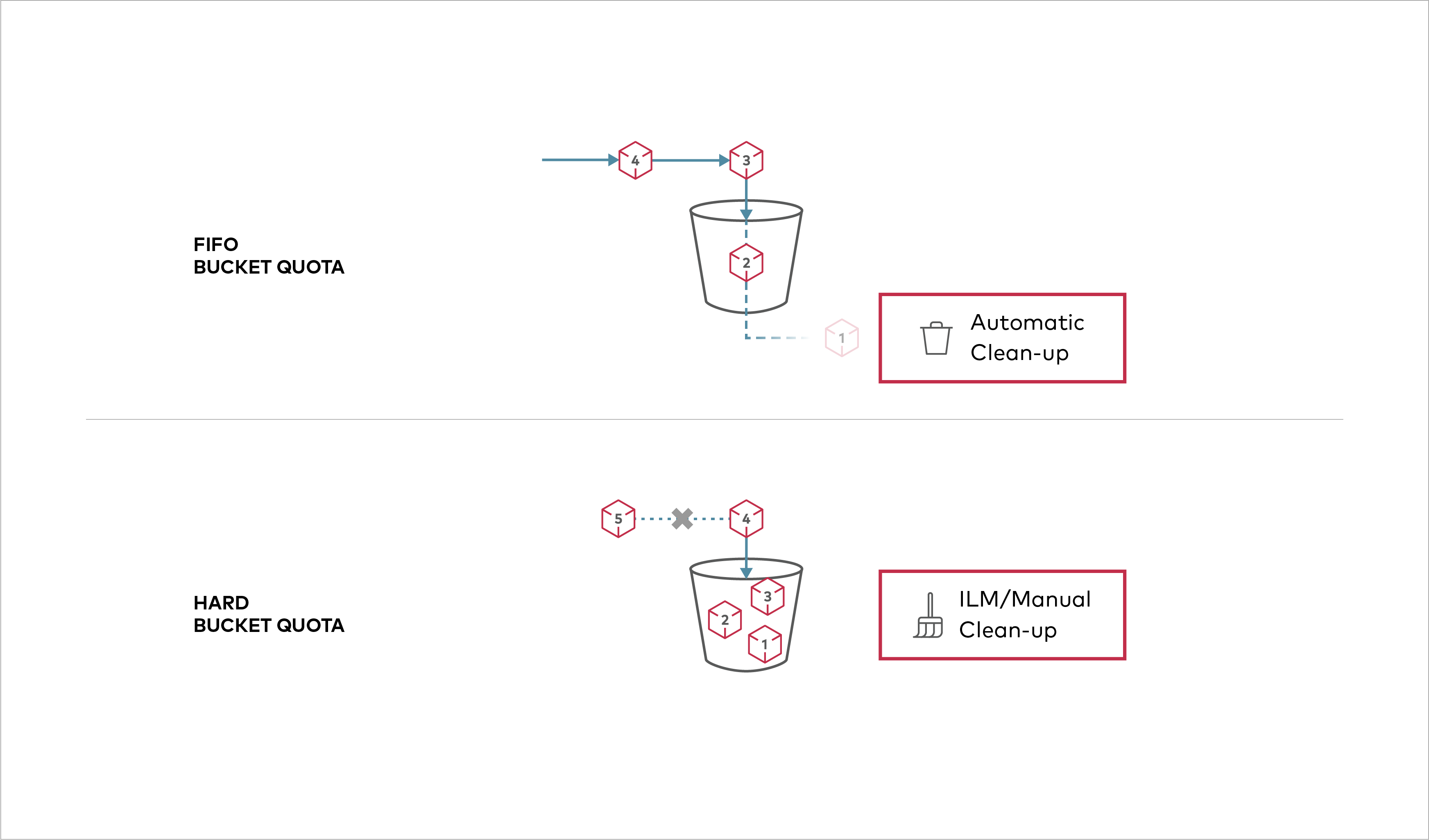 Buckets can be configured to have `Hard` quota - it disallows writes to the bucket after configured quota limit is reached.
Created: Sun Apr 05 19:28:12 GMT 2026 - Last Modified: Tue Aug 12 18:20:36 GMT 2025 - 1.1K bytes - Click Count (0)