- Sort Score
- Num 10 results
- Language All
Results 101 - 110 of 367 for Browser (0.05 seconds)
-
helm-releases/minio-3.1.0.tgz
additionalLabels: [] ## Additional annotations to include with deployment or statefulset additionalAnnotation: [] ## Additional arguments to pass to minio binary extraArgs: [] ## Port number for MinIO S3 API Access minioAPIPort: "9000" ## Port number for MinIO Browser COnsole Access minioConsolePort: "9001" ## Update strategy for Deployments DeploymentUpdate: type: RollingUpdate maxUnavailable: 0 maxSurge: 100% ## Update strategy for StatefulSets StatefulSetUpdate: updateStrategy: RollingUpdate ## Pod priority...
Created: Sun Apr 05 19:28:12 GMT 2026 - Last Modified: Sun Sep 12 18:19:27 GMT 2021 - 14.3K bytes - Click Count (0) -
helm-releases/minio-3.1.1.tgz
additionalLabels: [] ## Additional annotations to include with deployment or statefulset additionalAnnotation: [] ## Additional arguments to pass to minio binary extraArgs: [] ## Port number for MinIO S3 API Access minioAPIPort: "9000" ## Port number for MinIO Browser COnsole Access minioConsolePort: "9001" ## Update strategy for Deployments DeploymentUpdate: type: RollingUpdate maxUnavailable: 0 maxSurge: 100% ## Update strategy for StatefulSets StatefulSetUpdate: updateStrategy: RollingUpdate ## Pod priority...
Created: Sun Apr 05 19:28:12 GMT 2026 - Last Modified: Mon Sep 13 16:43:10 GMT 2021 - 14.3K bytes - Click Count (0) -
helm-releases/minio-3.1.6.tgz
additionalLabels: [] ## Additional annotations to include with deployment or statefulset additionalAnnotation: [] ## Additional arguments to pass to minio binary extraArgs: [] ## Port number for MinIO S3 API Access minioAPIPort: "9000" ## Port number for MinIO Browser COnsole Access minioConsolePort: "9001" ## Update strategy for Deployments DeploymentUpdate: type: RollingUpdate maxUnavailable: 0 maxSurge: 100% ## Update strategy for StatefulSets StatefulSetUpdate: updateStrategy: RollingUpdate ## Pod priority...
Created: Sun Apr 05 19:28:12 GMT 2026 - Last Modified: Thu Sep 23 19:56:39 GMT 2021 - 14.5K bytes - Click Count (0) -
docs/en/docs/async.md
But before that, handling asynchronous code was quite more complex and difficult.

In previous versions of Python, you could have used threads or [Gevent](https://www.gevent.org/). But the code is way more complex to understand, debug, and think about.
Created: Sun Apr 05 07:19:11 GMT 2026 - Last Modified: Thu Mar 05 18:13:19 GMT 2026 - 23.4K bytes - Click Count (0) -
src/main/java/org/codelibs/fess/app/web/admin/general/EditForm.java
     */
    @Size(max = 10)
    public String llmLogLevel;

    /** Enable or disable search file proxy. */
    @Size(max = 10)
    public String searchFileProxy;

    /** Enable or disable using browser locale for search. */
    @Size(max = 10)
    public String searchUseBrowserLocale;

    /** SSO type (none, oic, saml, spnego, entraid). */
    @Size(max = 100)
    public String ssoType;
Created: Tue Mar 31 13:07:34 GMT 2026 - Last Modified: Thu Mar 26 02:24:08 GMT 2026 - 15.8K bytes - Click Count (0) -
docs/en/docs/features.md
* [**Swagger UI**](https://github.com/swagger-api/swagger-ui), with interactive exploration, call and test your API directly from the browser. 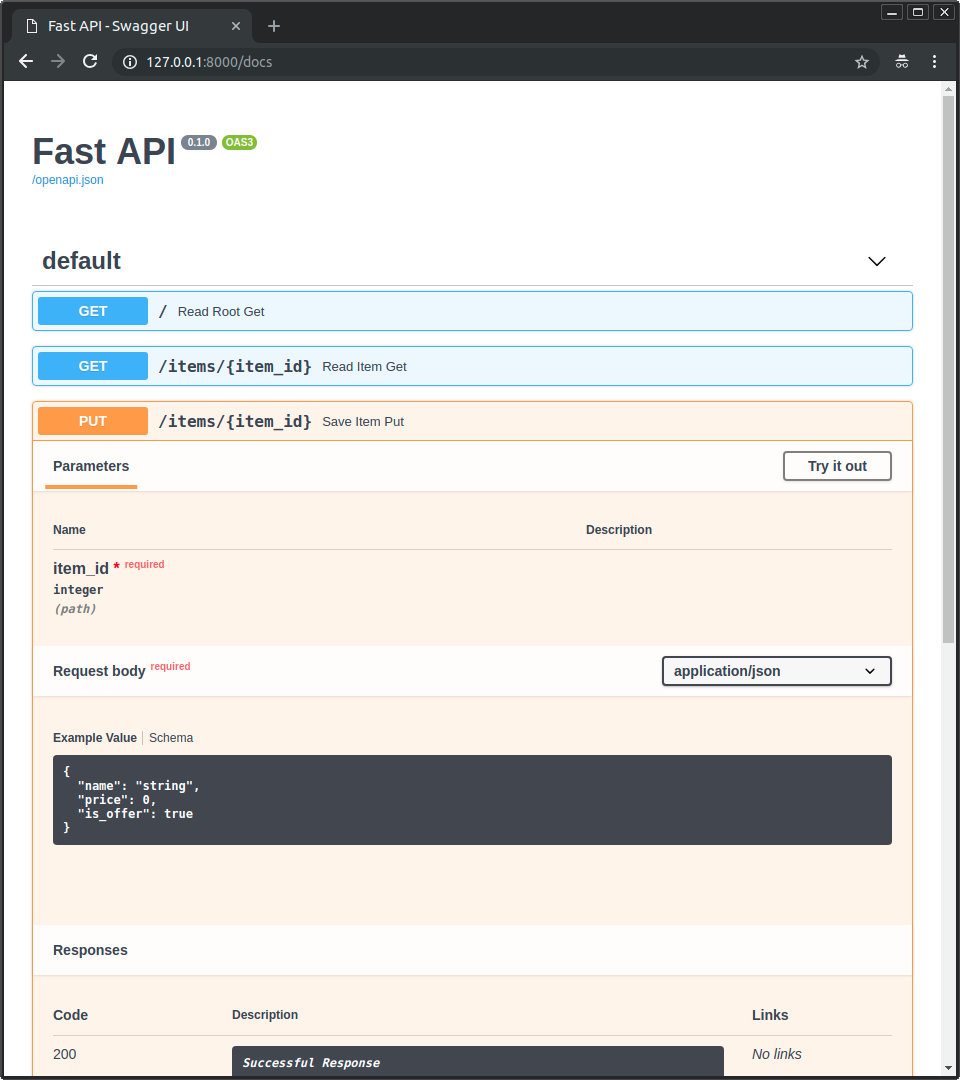 * Alternative API documentation with [**ReDoc**](https://github.com/Rebilly/ReDoc).
Created: Sun Apr 05 07:19:11 GMT 2026 - Last Modified: Thu Mar 05 18:13:19 GMT 2026 - 8.9K bytes - Click Count (0) -
docs/en/docs/tutorial/handling-errors.md
# Handling Errors { #handling-errors }

There are many situations in which you need to notify an error to a client that is using your API.

This client could be a browser with a frontend, a code from someone else, an IoT device, etc.

You could need to tell the client that:

* The client doesn't have enough privileges for that operation.
* The client doesn't have access to that resource.
* The item the client was trying to access doesn't exist.
* etc.
Created: Sun Apr 05 07:19:11 GMT 2026 - Last Modified: Thu Mar 05 18:13:19 GMT 2026 - 8.9K bytes - Click Count (0) -
helm-releases/minio-3.2.0.tgz
additionalLabels: [] ## Additional annotations to include with deployment or statefulset additionalAnnotation: [] ## Additional arguments to pass to minio binary extraArgs: [] ## Port number for MinIO S3 API Access minioAPIPort: "9000" ## Port number for MinIO Browser COnsole Access minioConsolePort: "9001" ## Update strategy for Deployments DeploymentUpdate: type: RollingUpdate maxUnavailable: 0 maxSurge: 100% ## Update strategy for StatefulSets StatefulSetUpdate: updateStrategy: RollingUpdate ## Pod priority...
Created: Sun Apr 05 19:28:12 GMT 2026 - Last Modified: Wed Oct 13 02:16:24 GMT 2021 - 14.6K bytes - Click Count (0) -
helm-releases/minio-3.3.0.tgz
additionalLabels: [] ## Additional annotations to include with deployment or statefulset additionalAnnotation: [] ## Additional arguments to pass to minio binary extraArgs: [] ## Port number for MinIO S3 API Access minioAPIPort: "9000" ## Port number for MinIO Browser COnsole Access minioConsolePort: "9001" ## Update strategy for Deployments DeploymentUpdate: type: RollingUpdate maxUnavailable: 0 maxSurge: 100% ## Update strategy for StatefulSets StatefulSetUpdate: updateStrategy: RollingUpdate ## Pod priority...
Created: Sun Apr 05 19:28:12 GMT 2026 - Last Modified: Thu Nov 25 17:33:26 GMT 2021 - 14.6K bytes - Click Count (0) -
helm-releases/minio-3.1.9.tgz
additionalLabels: [] ## Additional annotations to include with deployment or statefulset additionalAnnotation: [] ## Additional arguments to pass to minio binary extraArgs: [] ## Port number for MinIO S3 API Access minioAPIPort: "9000" ## Port number for MinIO Browser COnsole Access minioConsolePort: "9001" ## Update strategy for Deployments DeploymentUpdate: type: RollingUpdate maxUnavailable: 0 maxSurge: 100% ## Update strategy for StatefulSets StatefulSetUpdate: updateStrategy: RollingUpdate ## Pod priority...
Created: Sun Apr 05 19:28:12 GMT 2026 - Last Modified: Sun Oct 10 21:28:04 GMT 2021 - 14.6K bytes - Click Count (0)