- Sort Score
- Num 10 results
- Language All
Results 141 - 150 of 338 for UI (0.02 seconds)
-
docs/en/docs/advanced/templates.md
Also, before that, in previous versions, the `request` object was passed as part of the key-value pairs in the context for Jinja2.

///

/// tip

By declaring `response_class=HTMLResponse` the docs UI will be able to know that the response will be HTML.

///

/// note | Technical Details

You could also use `from starlette.templating import Jinja2Templates`.
Created: Sun Apr 05 07:19:11 GMT 2026 - Last Modified: Thu Mar 05 18:13:19 GMT 2026 - 3.4K bytes - Click Count (0) -
src/main/java/org/codelibs/fess/app/web/admin/reqheader/AdminReqheaderAction.java
            copyBeanToBean(form, entity, op -> op.exclude(Constants.COMMON_CONVERSION_RULE));
            return entity;
        });
    }

    /**
     * Registers web configuration items for rendering in the UI.
     *
     * @param data the render data to populate with web config items
     */
    protected void registerWebConfigItems(final RenderData data) {
        final List<Map<String, String>> itemList = new ArrayList<>();
Created: Tue Mar 31 13:07:34 GMT 2026 - Last Modified: Thu Nov 20 13:56:35 GMT 2025 - 17.7K bytes - Click Count (0) -
docs/en/docs/deployment/docker.md
You will see the automatic interactive API documentation (provided by [Swagger UI](https://github.com/swagger-api/swagger-ui)): 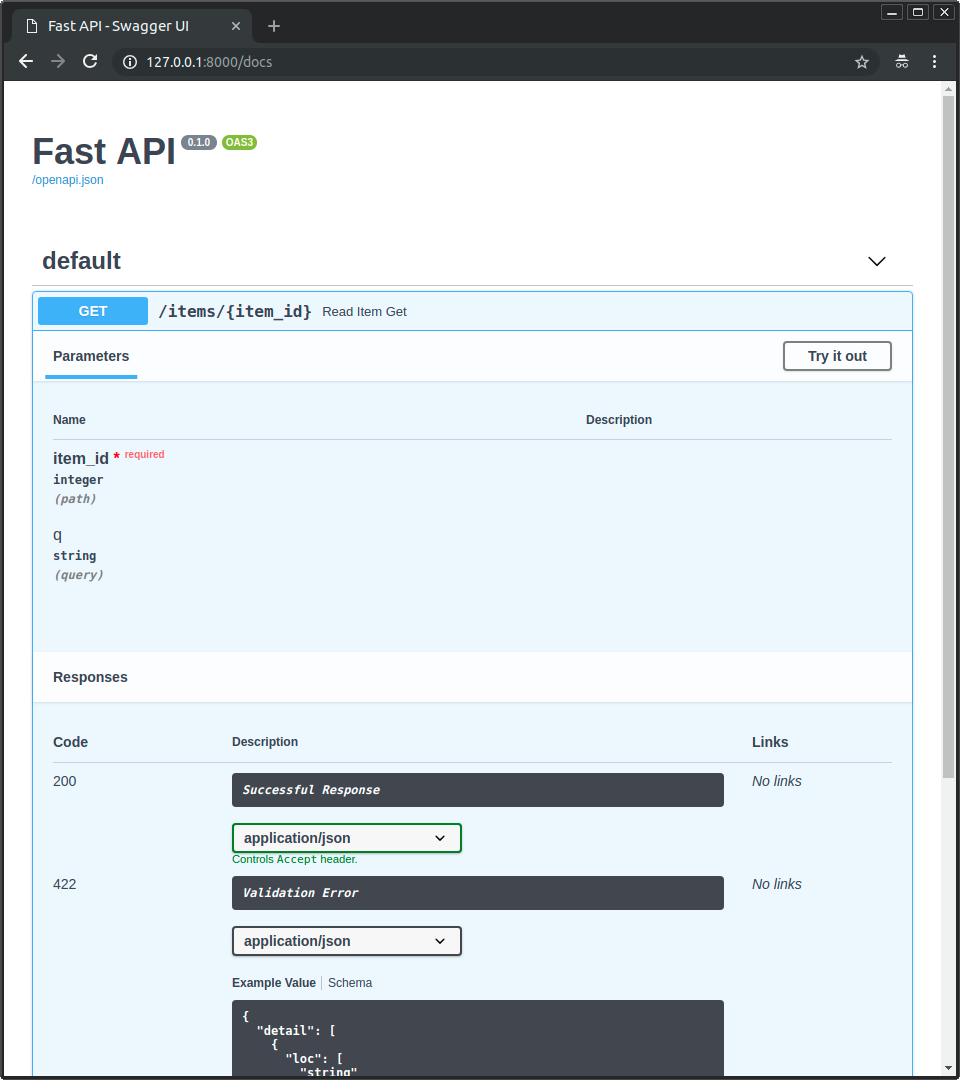 ## Alternative API docs { #alternative-api-docs }
Created: Sun Apr 05 07:19:11 GMT 2026 - Last Modified: Thu Mar 05 18:13:19 GMT 2026 - 28.3K bytes - Click Count (1) -
docs/zh-hant/docs/tutorial/sql-databases.md
```

</div>

然後前往 `/docs` 的 UI,你會看到 FastAPI 使用這些模型來「文件化」API,也會用它們來「序列化」與「驗證」資料。

<div class="screenshot">
<img src="/img/tutorial/sql-databases/image01.png">
</div>

## 用多個模型更新應用 { #update-the-app-with-multiple-models }

現在我們稍微「重構」一下這個應用,以提升「安全性」與「彈性」。

如果你檢查前一版的應用,在 UI 中你會看到,到目前為止它讓用戶端自己決定要建立的 `Hero` 的 `id`。😱
Created: Sun Apr 05 07:19:11 GMT 2026 - Last Modified: Fri Mar 20 17:05:38 GMT 2026 - 14.8K bytes - Click Count (0) -
docs/iam/identity-management-plugin.md
Created: Sun Apr 05 19:28:12 GMT 2026 - Last Modified: Fri May 27 00:58:09 GMT 2022 - 4.2K bytes - Click Count (0) -
CLAUDE.md
src/main/resources/
├── fess_config.properties     # Main configuration
├── app.xml, fess.xml          # DI configuration
├── fess_*.xml                 # Feature-specific DI
├── fess_label_*.properties    # UI labels (i18n)
├── fess_message_*.properties  # Validation messages (i18n)
└── fess_indices/              # OpenSearch index mappings

src/main/webapp/WEB-INF/view/  # JSP templates
Created: Tue Mar 31 13:07:34 GMT 2026 - Last Modified: Thu Mar 19 09:48:10 GMT 2026 - 7.8K bytes - Click Count (0) -
src/main/java/org/codelibs/fess/app/web/admin/failureurl/EditForm.java
     */
    @Size(max = 1000)
    public String configId;

    /**
     * Returns the current page number for pagination.
     * This method provides access to the current page number for UI display.
     *
     * @return The current page number as a string
     */
    public String getCurrentPageNumber() {
        return pageNumber;
    }

    /**
Created: Tue Mar 31 13:07:34 GMT 2026 - Last Modified: Thu Jul 17 08:28:31 GMT 2025 - 4.2K bytes - Click Count (0) -
schema/naming.go
	commonInitialisms         = []string{"API", "ASCII", "CPU", "CSS", "DNS", "EOF", "GUID", "HTML", "HTTP", "HTTPS", "ID", "IP", "JSON", "LHS", "QPS", "RAM", "RHS", "RPC", "SLA", "SMTP", "SSH", "TLS", "TTL", "UID", "UI", "UUID", "URI", "URL", "UTF8", "VM", "XML", "XSRF", "XSS"}
	commonInitialismsReplacer *strings.Replacer
)

func init() {
	commonInitialismsForReplacer := make([]string, 0, len(commonInitialisms))
Created: Sun Apr 05 09:35:12 GMT 2026 - Last Modified: Wed Jun 12 03:46:59 GMT 2024 - 5.3K bytes - Click Count (0) -
docs/zh-hant/docs/advanced/openapi-webhooks.md
Created: Sun Apr 05 07:19:11 GMT 2026 - Last Modified: Fri Mar 20 17:05:38 GMT 2026 - 2.6K bytes - Click Count (0) -
docs/zh-hant/docs/alternatives.md
之後 Swagger 交由 Linux 基金會管理,並更名為 OpenAPI。

因此,談到 2.0 版時常說「Swagger」,而 3+ 版則是「OpenAPI」。

/// check | 啟發 **FastAPI**

採用並使用開放的 API 規格標準,而非自訂格式。

並整合基於標準的使用者介面工具:

* [Swagger UI](https://github.com/swagger-api/swagger-ui)
* [ReDoc](https://github.com/Rebilly/ReDoc)

選擇這兩個是因為它們相當受歡迎且穩定,但稍加搜尋,你會發現有數十種 OpenAPI 的替代使用者介面(都能與 **FastAPI** 一起使用)。

///

### Flask 的 REST 框架 { #flask-rest-frameworks }
Created: Sun Apr 05 07:19:11 GMT 2026 - Last Modified: Fri Mar 20 17:05:38 GMT 2026 - 20K bytes - Click Count (0)