- Sort Score
- Num 10 results
- Language All
Results 481 - 490 of 1,235 for Parametre (0.11 seconds)
-
src/test/java/org/codelibs/fess/app/job/ScriptExecutorJobTest.java
        final AtomicReference<JobLog> storedJobLog = new AtomicReference<>();

        registerComponents(scheduledJob, storedJobLog);

        // Create runtime with JOB_LOG_ID parameter
        final Map<String, Object> params = new HashMap<>();
        params.put(Constants.SCHEDULED_JOB, scheduledJob);
        params.put(Constants.JOB_LOG_ID, "pregenerated-abc123");
Created: Tue Mar 31 13:07:34 GMT 2026 - Last Modified: Sat Mar 28 11:55:54 GMT 2026 - 13.7K bytes - Click Count (0) -
src/main/java/jcifs/NameServiceClient.java
     * implemented. A <code>scope</code> of <code>null</code> or <code>""</code>
     * signifies no scope.
     *
     * The additional <code>svr</code> parameter specifies the address to
     * query. This might be the address of a specific host, a name server,
     * or a broadcast address.
     *
     * @param host
     *            the name to resolve
     * @param type
Created: Sun Apr 05 00:10:12 GMT 2026 - Last Modified: Sat Aug 16 01:32:48 GMT 2025 - 8.4K bytes - Click Count (0) -
internal/bucket/replication/replication.go
	errReplicationUniquePriority        = Errorf("Replication configuration has duplicate priority")
	errRoleArnMissingLegacy             = Errorf("Missing required parameter `Role` in ReplicationConfiguration")
	errDestinationArnMissing            = Errorf("Missing required parameter `Destination` in Replication rule")
	errInvalidSourceSelectionCriteria   = Errorf("Invalid ReplicaModification status")
Created: Sun Apr 05 19:28:12 GMT 2026 - Last Modified: Sun Mar 30 00:56:02 GMT 2025 - 8.9K bytes - Click Count (0) -
ci/official/containers/ml_build/builder.devtoolset/build_devtoolset.sh
  exit 1
  ;;
esac

mkdir -p "${TARGET}"

# Download glibc's shared and development libraries based on the value of the
# `VERSION` parameter.
# Note: 'Templatizing' this and the other conditional branches would require
# defining several variables (version, os, path) making it difficult to maintain
# and extend for future modifications.
case "${VERSION}" in
Created: Tue Apr 07 12:39:13 GMT 2026 - Last Modified: Fri Jan 16 21:51:13 GMT 2026 - 8K bytes - Click Count (0) -
.ci/templates.t/periodic-trigger-lgc.yml
          echo "Trigger properties:" $(cat trigger.properties)
      - trigger-builds:
        - project: "{periodic-job}"
          current-parameters: false
          git-revision: false
          parameter-factories:
            - factory: filebuild
Created: Wed Apr 08 16:19:15 GMT 2026 - Last Modified: Thu May 06 21:46:09 GMT 2021 - 1K bytes - Click Count (0) -
docs/en/docs/tutorial/dependencies/global-dependencies.md
tions }

Later, when reading about how to structure bigger applications ([Bigger Applications - Multiple Files](../../tutorial/bigger-applications.md)), possibly with multiple files, you will learn how to declare a single `dependencies` parameter for a group of *path operations*....
Created: Sun Apr 05 07:19:11 GMT 2026 - Last Modified: Thu Mar 05 18:13:19 GMT 2026 - 1K bytes - Click Count (0) -
android/guava/src/com/google/common/util/concurrent/ParametricNullness.java
 */

package com.google.common.util.concurrent;

import static java.lang.annotation.ElementType.FIELD;
import static java.lang.annotation.ElementType.METHOD;
import static java.lang.annotation.ElementType.PARAMETER;
import static java.lang.annotation.RetentionPolicy.CLASS;

import com.google.common.annotations.GwtCompatible;
import java.lang.annotation.Retention;
import java.lang.annotation.Target;

/**
Created: Fri Apr 03 12:43:13 GMT 2026 - Last Modified: Sat Dec 21 16:20:21 GMT 2024 - 3.1K bytes - Click Count (0) -
guava/src/com/google/common/cache/ParametricNullness.java
 */

package com.google.common.cache;

import static java.lang.annotation.ElementType.FIELD;
import static java.lang.annotation.ElementType.METHOD;
import static java.lang.annotation.ElementType.PARAMETER;
import static java.lang.annotation.RetentionPolicy.CLASS;

import com.google.common.annotations.GwtCompatible;
import java.lang.annotation.Retention;
import java.lang.annotation.Target;

/**
Created: Fri Apr 03 12:43:13 GMT 2026 - Last Modified: Sat Dec 21 16:20:21 GMT 2024 - 3.1K bytes - Click Count (0) -
src/test/java/jcifs/smb1/smb1/SmbComNegotiateTest.java
     */
    @Test
    void testWriteParameterWordsWireFormat() {
        byte[] dst = new byte[10];
        int dstIndex = 0;
        // The method should return 0 as it writes no parameter words
        int result = smbComNegotiate.writeParameterWordsWireFormat(dst, dstIndex);
        assertEquals(0, result, "writeParameterWordsWireFormat should return 0.");
    }

    /**
Created: Sun Apr 05 00:10:12 GMT 2026 - Last Modified: Thu Aug 14 05:31:44 GMT 2025 - 4K bytes - Click Count (0) -
docs/de/docs/index.md
* Klicken Sie auf den Button „Try it out“, damit können Sie die Parameter ausfüllen und direkt mit der API interagieren: 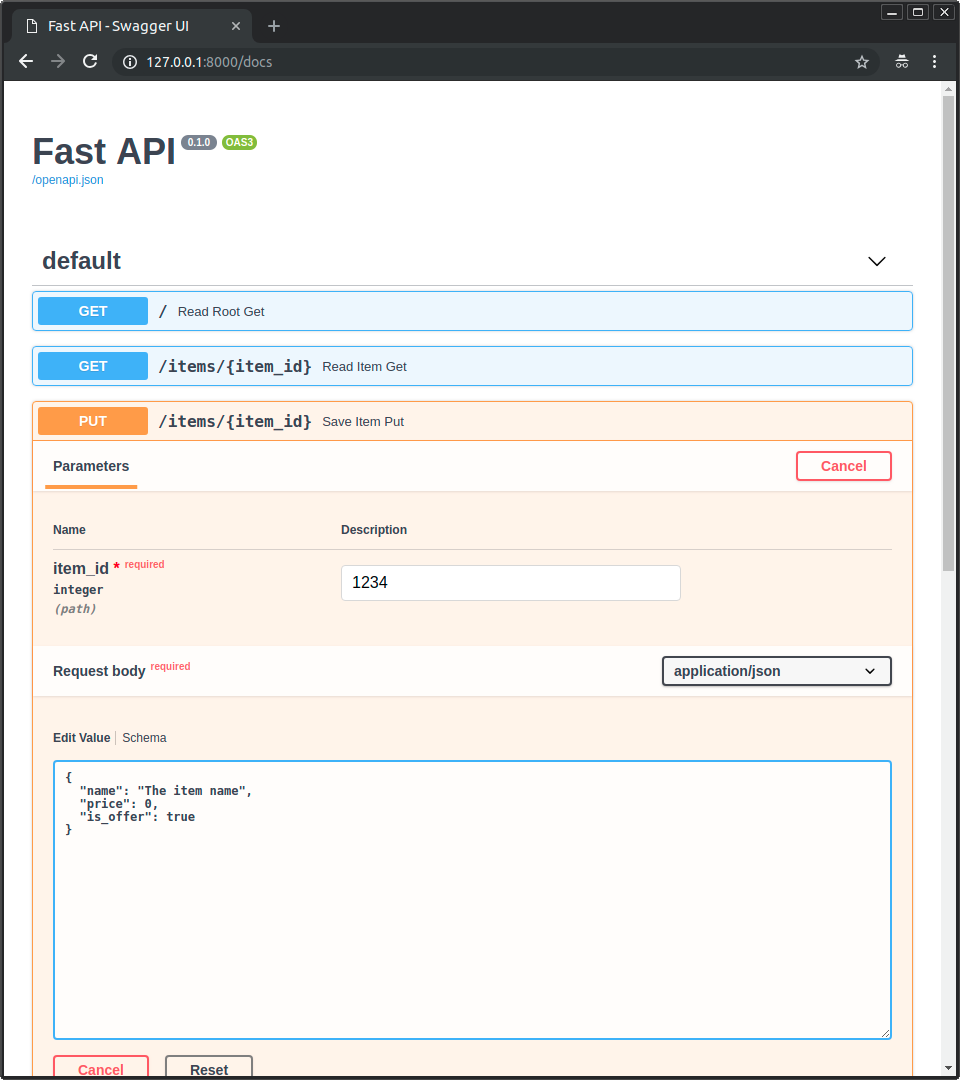 * Klicken Sie dann auf den Button „Execute“, die Benutzeroberfläche wird mit Ihrer API kommunizieren, die Parameter senden, die Ergebnisse erhalten und sie auf dem Bildschirm anzeigen:
Created: Sun Apr 05 07:19:11 GMT 2026 - Last Modified: Thu Mar 19 17:58:09 GMT 2026 - 23.6K bytes - Click Count (1)