- Sort Score
- Result 10 results
- Languages All
Results 511 - 520 of 638 for down (0.22 sec)
-
helm-releases/minio-2.0.0.tgz
providing it to Helm via the `trustedCertsSecret` value. If `.Values.tls.enabled` is `true` and you're installing certificates for third party CAs, remember to include Minio's own certificate with key `public.crt`, if it also needs to be trusted. For instance, given that TLS is enabled and you need to add trust for Minio's own CA and for the CA of a Keycloak server, a Kubernetes secret can be created from the certificate files using `kubectl`: ``` kubectl -n minio create secret generic minio-trusted-certs...
Registered: Sun Dec 28 19:28:13 UTC 2025 - Last Modified: Thu Aug 26 07:36:46 UTC 2021 - 13.6K bytes - Viewed (0) -
android/guava/src/com/google/common/graph/Graph.java
/**
 * An interface for <a
 * href="https://en.wikipedia.org/wiki/Graph_(discrete_mathematics)">graph</a>-structured data,
 * whose edges are anonymous entities with no identity or information of their own.
 *
 * <p>A graph is composed of a set of nodes and a set of edges connecting pairs of nodes.
 *
 * <p>There are three primary interfaces provided to represent graphs. In order of increasing
Registered: Fri Dec 26 12:43:10 UTC 2025 - Last Modified: Mon Mar 17 20:26:29 UTC 2025 - 13.6K bytes - Viewed (0) -
android/guava/src/com/google/common/base/Equivalence.java
     * Wrapper<Number>, Wrapper<Integer>, Wrapper<@Nullable Integer>, etc. If we used just
     * Equivalence<? super T> below, no type could satisfy both that bound and T's own
     * bound. With this type, they have some overlap: in our example, Equivalence<Number>
     * and Equivalence<Object>.
     */
    private final Equivalence<? super @NonNull T> equivalence;
Registered: Fri Dec 26 12:43:10 UTC 2025 - Last Modified: Thu Jul 10 01:47:55 UTC 2025 - 14.5K bytes - Viewed (0) -
guava/src/com/google/common/graph/Graph.java
/**
 * An interface for <a
 * href="https://en.wikipedia.org/wiki/Graph_(discrete_mathematics)">graph</a>-structured data,
 * whose edges are anonymous entities with no identity or information of their own.
 *
 * <p>A graph is composed of a set of nodes and a set of edges connecting pairs of nodes.
 *
 * <p>There are three primary interfaces provided to represent graphs. In order of increasing
Registered: Fri Dec 26 12:43:10 UTC 2025 - Last Modified: Mon Mar 17 20:26:29 UTC 2025 - 13.6K bytes - Viewed (0) -
helm-releases/minio-3.1.2.tgz
providing it to Helm via the `trustedCertsSecret` value. If `.Values.tls.enabled` is `true` and you're installing certificates for third party CAs, remember to include Minio's own certificate with key `public.crt`, if it also needs to be trusted. For instance, given that TLS is enabled and you need to add trust for Minio's own CA and for the CA of a Keycloak server, a Kubernetes secret can be created from the certificate files using `kubectl`: ``` kubectl -n minio create secret generic minio-trusted-certs...
Registered: Sun Dec 28 19:28:13 UTC 2025 - Last Modified: Sat Sep 18 04:26:47 UTC 2021 - 14.4K bytes - Viewed (0) -
helm-releases/minio-3.1.4.tgz
providing it to Helm via the `trustedCertsSecret` value. If `.Values.tls.enabled` is `true` and you're installing certificates for third party CAs, remember to include Minio's own certificate with key `public.crt`, if it also needs to be trusted. For instance, given that TLS is enabled and you need to add trust for Minio's own CA and for the CA of a Keycloak server, a Kubernetes secret can be created from the certificate files using `kubectl`: ``` kubectl -n minio create secret generic minio-trusted-certs...
Registered: Sun Dec 28 19:28:13 UTC 2025 - Last Modified: Mon Sep 20 05:30:22 UTC 2021 - 14.4K bytes - Viewed (0) -
helm-releases/minio-3.1.5.tgz
providing it to Helm via the `trustedCertsSecret` value. If `.Values.tls.enabled` is `true` and you're installing certificates for third party CAs, remember to include Minio's own certificate with key `public.crt`, if it also needs to be trusted. For instance, given that TLS is enabled and you need to add trust for Minio's own CA and for the CA of a Keycloak server, a Kubernetes secret can be created from the certificate files using `kubectl`: ``` kubectl -n minio create secret generic minio-trusted-certs...
Registered: Sun Dec 28 19:28:13 UTC 2025 - Last Modified: Wed Sep 22 16:52:01 UTC 2021 - 14.4K bytes - Viewed (0) -
android/guava-tests/test/com/google/common/util/concurrent/GeneratedMonitorTest.java
import junit.framework.TestSuite;
import org.jspecify.annotations.NullUnmarked;
import org.jspecify.annotations.Nullable;

/**
 * Generated tests for {@link Monitor}.
 *
 * <p>This test class generates all of its own test cases in the {@link #suite()} method. Every
 * {@code enterXxx}, {@code tryEnterXxx}, and {@code waitForXxx} method of the {@code Monitor} class
Registered: Fri Dec 26 12:43:10 UTC 2025 - Last Modified: Thu Dec 11 21:00:51 UTC 2025 - 27.1K bytes - Viewed (0) -
docs/bucket/replication/README.md
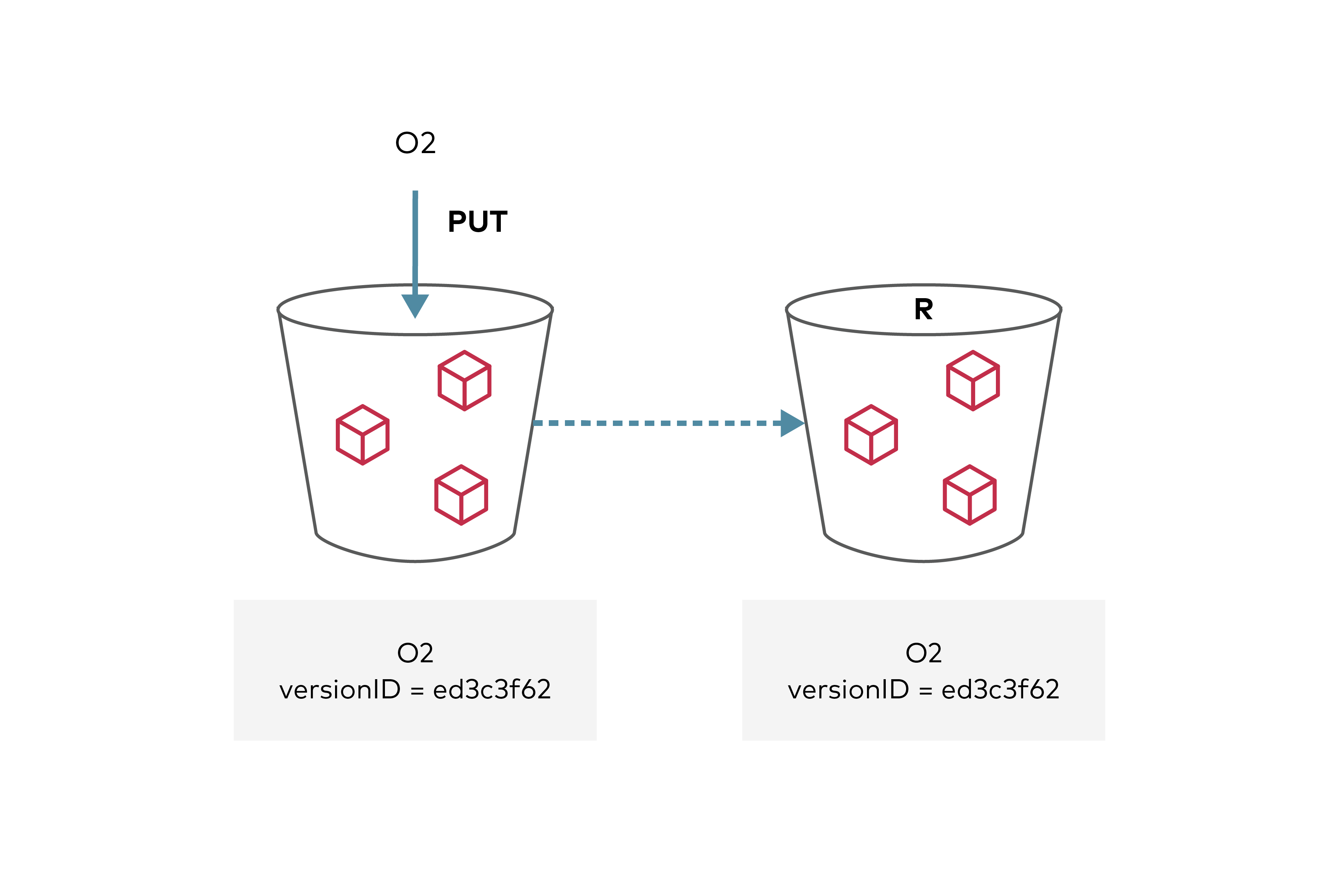
Registered: Sun Dec 28 19:28:13 UTC 2025 - Last Modified: Tue Aug 12 18:20:36 UTC 2025 - 18.3K bytes - Viewed (0) -
helm-releases/minio-4.0.15.tgz
providing it to Helm via the `trustedCertsSecret` value. If `.Values.tls.enabled` is `true` and you're installing certificates for third party CAs, remember to include MinIO's own certificate with key `public.crt`, if it also needs to be trusted. For instance, given that TLS is enabled and you need to add trust for MinIO's own CA and for the CA of a Keycloak server, a Kubernetes secret can be created from the certificate files using `kubectl`: ``` kubectl -n minio create secret generic minio-trusted-certs...
Registered: Sun Dec 28 19:28:13 UTC 2025 - Last Modified: Wed Sep 21 11:07:01 UTC 2022 - 20K bytes - Viewed (0)