- Sort Score
- Num 10 results
- Language All
Results 121 - 130 of 743 for Types (0.02 seconds)
-
docs/pt/docs/tutorial/body-nested-models.md
* Validação de dados
* Documentação automatica

## Tipos especiais e validação { #special-types-and-validation }

Além dos tipos singulares normais como `str`, `int`, `float`, etc. Você também pode usar tipos singulares mais complexos que herdam de `str`.
Created: Sun Dec 28 07:19:09 GMT 2025 - Last Modified: Wed Dec 17 20:41:43 GMT 2025 - 7.4K bytes - Click Count (0) -
src/builtin/builtin.go
type any = interface{}

// comparable is an interface that is implemented by all comparable types
// (booleans, numbers, strings, pointers, channels, arrays of comparable types,
// structs whose fields are all comparable types).
// The comparable interface may only be used as a type parameter constraint,
// not as the type of a variable.
type comparable interface{ comparable }
Created: Tue Dec 30 11:13:12 GMT 2025 - Last Modified: Mon Dec 30 23:59:23 GMT 2024 - 12.8K bytes - Click Count (0) -
docs/de/docs/tutorial/body-nested-models.md
* Automatische Dokumentation

## Spezielle Typen und Validierungen { #special-types-and-validation }

Abgesehen von normalen einfachen Typen wie `str`, `int`, `float`, usw. können Sie komplexere einfache Typen verwenden, die von `str` erben.
Created: Sun Dec 28 07:19:09 GMT 2025 - Last Modified: Wed Dec 17 20:41:43 GMT 2025 - 7.6K bytes - Click Count (0) -
samples/tlssurvey/src/main/kotlin/okhttp3/survey/RunSurvey.kt
 */
package okhttp3.survey

import java.security.Security
import okhttp3.Cache
import okhttp3.OkHttpClient
import okhttp3.survey.ssllabs.SslLabsClient
import okhttp3.survey.types.Client
import okhttp3.survey.types.SuiteId
import okio.FileSystem
import okio.Path.Companion.toPath
import org.conscrypt.Conscrypt

@Suppress("ktlint:standard:property-naming")
suspend fun main() {
  val includeConscrypt = false
Created: Fri Dec 26 11:42:13 GMT 2025 - Last Modified: Wed Mar 19 19:25:20 GMT 2025 - 3.5K bytes - Click Count (0) -
samples/guide/src/main/java/okhttp3/recipes/RequestBodyCompression.java
 * limitations under the License.
 */
package okhttp3.recipes;

import com.squareup.moshi.JsonAdapter;
import com.squareup.moshi.Moshi;
import com.squareup.moshi.Types;
import java.io.IOException;
import java.util.LinkedHashMap;
import java.util.Map;
import okhttp3.Interceptor;
import okhttp3.MediaType;
import okhttp3.OkHttpClient;
import okhttp3.Request;
Created: Fri Dec 26 11:42:13 GMT 2025 - Last Modified: Wed Jun 04 17:43:43 GMT 2025 - 3.1K bytes - Click Count (0) -
tensorflow/c/checkpoint_reader.h
#include <memory>
#include <string>

#include "tensorflow/c/tf_status_helper.h"
#include "tensorflow/core/framework/tensor_shape.h"
#include "tensorflow/core/platform/status.h"
#include "tensorflow/core/platform/types.h"
#include "tensorflow/core/util/tensor_bundle/tensor_bundle.h"
#include "tensorflow/core/util/tensor_slice_reader.h"

namespace tensorflow {
namespace checkpoint {

class TensorSliceReader;
Created: Tue Dec 30 12:39:10 GMT 2025 - Last Modified: Thu Oct 12 08:49:52 GMT 2023 - 3.1K bytes - Click Count (0) -
docs/fr/docs/index.md
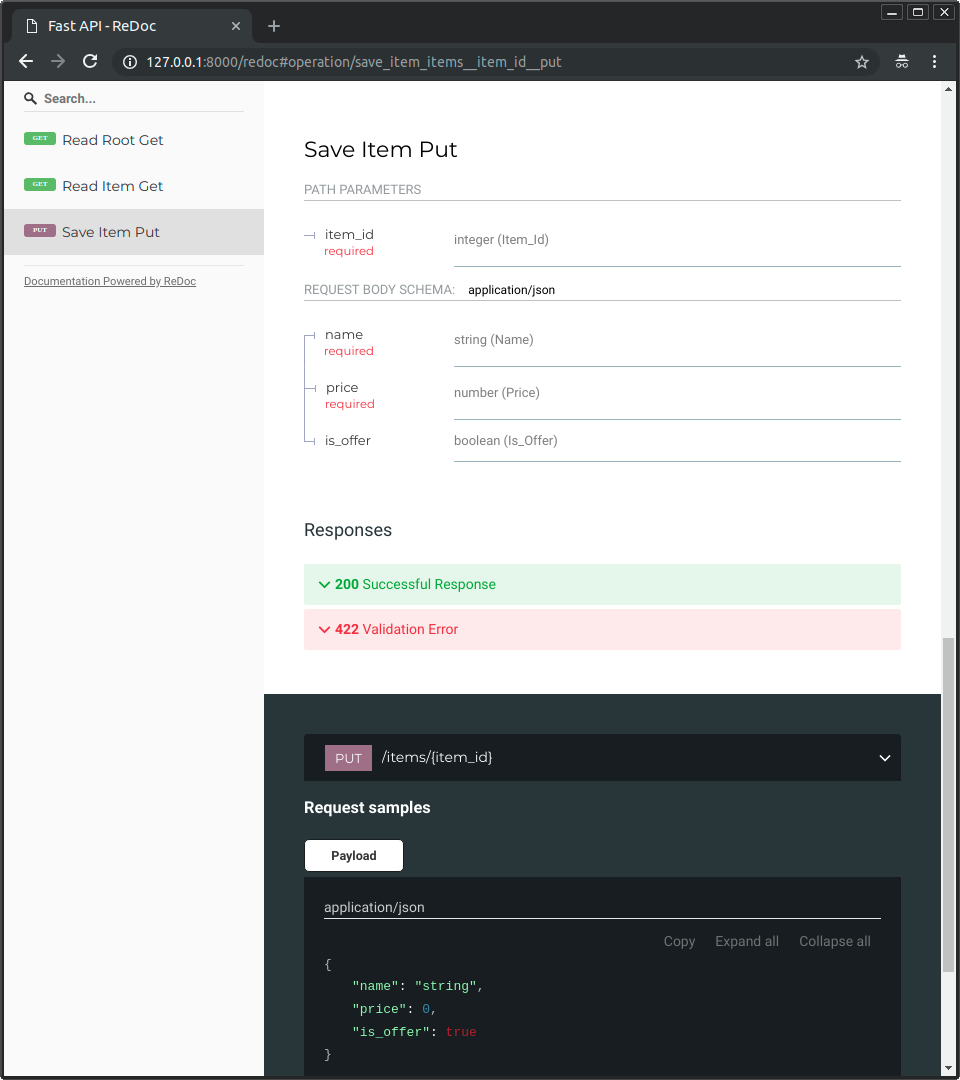 ### En résumé En résumé, vous déclarez **une fois** les types de paramètres, <abbr title="en anglais : body">le corps</abbr> de la requête, etc. en tant que paramètres de fonction. Vous faites cela avec les types Python standard modernes. Vous n'avez pas à apprendre une nouvelle syntaxe, les méthodes ou les classes d'une bibliothèque spécifique, etc.
Created: Sun Dec 28 07:19:09 GMT 2025 - Last Modified: Sat Oct 11 17:48:49 GMT 2025 - 22K bytes - Click Count (0) -
android/guava-tests/benchmark/com/google/common/util/concurrent/FuturesGetCheckedBenchmark.java
  @Param Result result;
  @Param ExceptionType exceptionType;

  /**
   * The number of other exception types in the cache of known-good exceptions and the number of
   * other {@code ClassValue} entries for the exception type to be tested. This lets us evaluate
   * whether our solution scales to use with multiple exception types and to whether it is affected
Created: Fri Dec 26 12:43:10 GMT 2025 - Last Modified: Tue May 13 17:27:14 GMT 2025 - 6.5K bytes - Click Count (0) -
internal/logger/target/loggertypes/targettype_string.go
// Code generated by "stringer -type=TargetType -trimprefix=Target types.go"; DO NOT EDIT.

package loggertypes

import "strconv"

func _() {
	// An "invalid array index" compiler error signifies that the constant values have changed.
	// Re-run the stringer command to generate them again.
	var x [1]struct{}
	_ = x[TargetConsole-1]
	_ = x[TargetHTTP-2]
	_ = x[TargetKafka-3]
}

const _TargetType_name = "ConsoleHTTPKafka"
Created: Sun Dec 28 19:28:13 GMT 2025 - Last Modified: Fri Jul 18 21:56:31 GMT 2025 - 709 bytes - Click Count (0) -
docs/fr/docs/tutorial/query-params.md
* `skip` : avec une valeur de`0`
* `limit` : avec une valeur de `10`

Faisant partie de l'URL, ces valeurs sont des chaînes de caractères (`str`).

Mais quand on les déclare avec des types Python (dans l'exemple précédent, en tant qu'`int`), elles sont converties dans les types renseignés.

Toutes les fonctionnalités qui s'appliquent aux paramètres de chemin s'appliquent aussi aux paramètres de requête :
Created: Sun Dec 28 07:19:09 GMT 2025 - Last Modified: Sat Nov 09 16:39:20 GMT 2024 - 5.6K bytes - Click Count (0)