- Sort Score
- Num 10 results
- Language All
Results 501 - 510 of 2,350 for Sample (0.06 seconds)
The search processing time has exceeded the limit. The displayed results may be partial.
-
fastapi/security/api_key.py
    ## Usage

    Create an instance object and use that object as the dependency in `Depends()`.

    The dependency result will be a string containing the key value.

    ## Example

    ```python
    from fastapi import Depends, FastAPI
    from fastapi.security import APIKeyQuery

    app = FastAPI()

    query_scheme = APIKeyQuery(name="api_key")


    @app.get("/items/")
Created: Sun Apr 05 07:19:11 GMT 2026 - Last Modified: Sun Mar 15 11:44:39 GMT 2026 - 9.6K bytes - Click Count (1) -
src/test/java/org/codelibs/fess/helper/CrawlingInfoHelperTest.java
        // Test characters that need special encoding
        String input1 = "http://example.com/文档"; // Unicode characters
        String result1 = crawlingInfoHelper.generateId(input1);
        assertNotNull(result1);
        assertEquals(128, result1.length());

        String input2 = "http://example.com/path with spaces";
        String result2 = crawlingInfoHelper.generateId(input2);
Created: Tue Mar 31 13:07:34 GMT 2026 - Last Modified: Thu Mar 12 01:46:45 GMT 2026 - 28.7K bytes - Click Count (0) -
docs/ko/docs/index.md
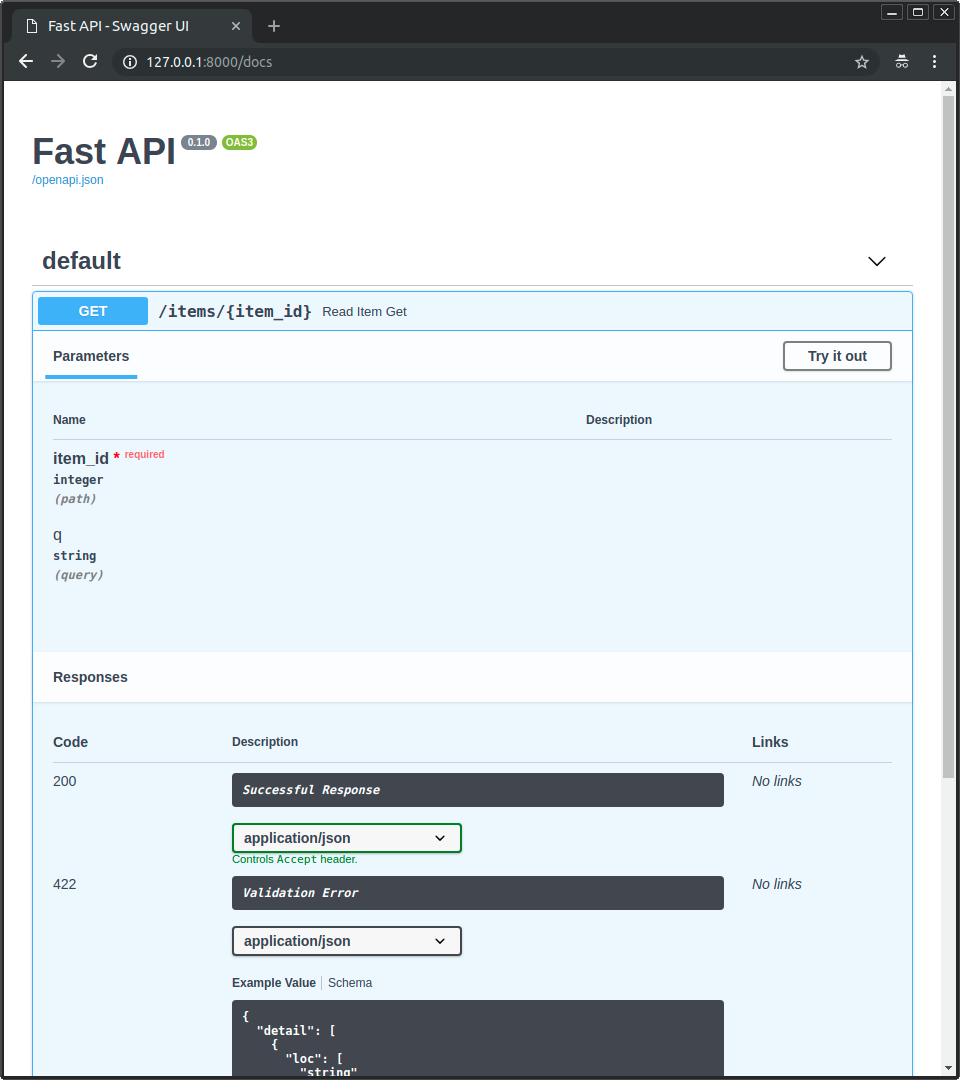 ### 대안 API 문서 { #alternative-api-docs } 그리고 이제 [http://127.0.0.1:8000/redoc](http://127.0.0.1:8000/redoc)로 가봅시다. 다른 자동 문서를 볼 수 있습니다([ReDoc](https://github.com/Rebilly/ReDoc) 제공): 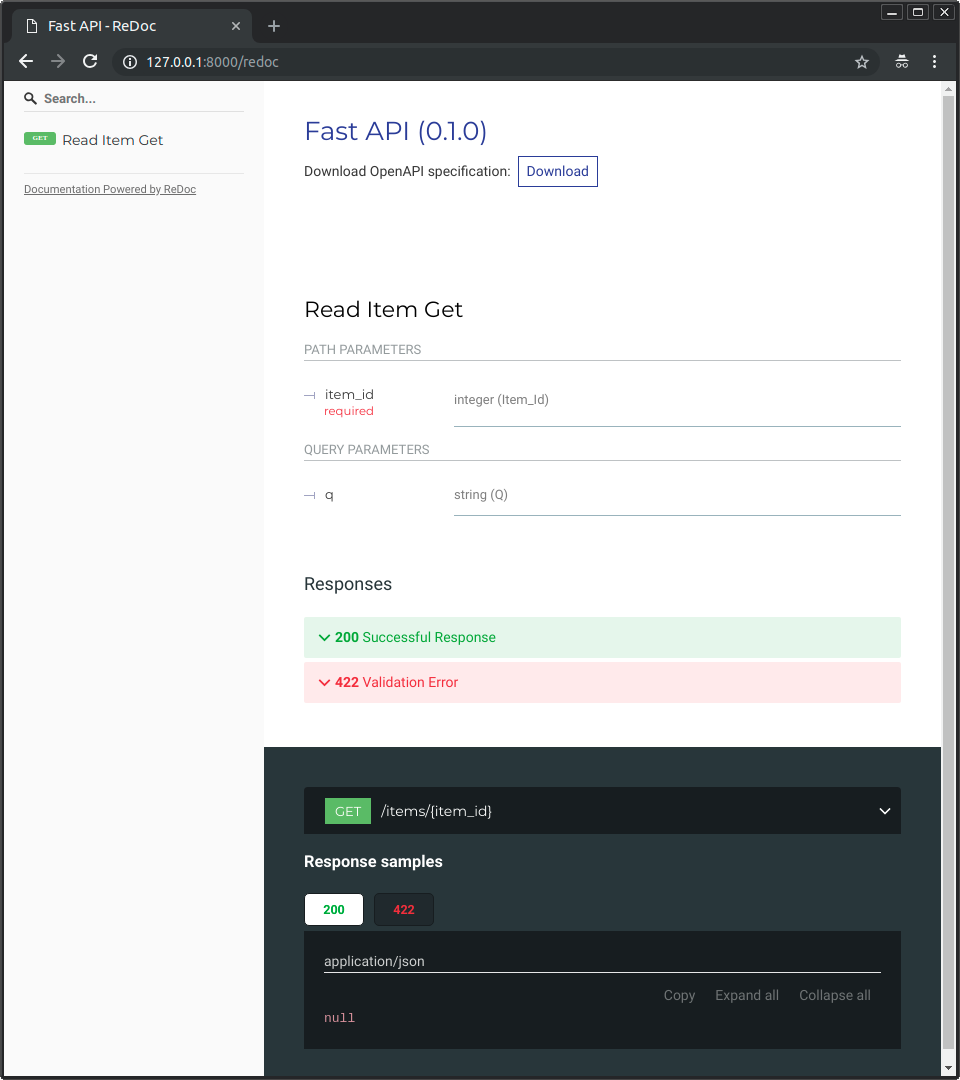 ## 예제 업그레이드 { #example-upgrade } 이제 `PUT` 요청에서 본문을 받기 위해 `main.py` 파일을 수정해봅시다.Created: Sun Apr 05 07:19:11 GMT 2026 - Last Modified: Fri Mar 20 14:06:26 GMT 2026 - 23.4K bytes - Click Count (0) -
src/test/java/org/codelibs/fess/helper/MarkdownRendererTest.java
    }

    @Test
    public void test_render_link_http() {
        String result = markdownRenderer.render("[Link](http://example.com)");
        assertTrue(result.contains("<a"));
        assertTrue(result.contains("href=\"http://example.com\""));
        assertTrue(result.contains("Link"));
        assertTrue(result.contains("rel=\"nofollow\""));
    }

    @Test
Created: Tue Mar 31 13:07:34 GMT 2026 - Last Modified: Wed Jan 14 14:29:07 GMT 2026 - 11.1K bytes - Click Count (0) -
docs/en/docs/tutorial/request-files.md
As all these methods are `async` methods, you need to "await" them.

For example, inside of an `async` *path operation function* you can get the contents with:

```Python
contents = await myfile.read()
```

If you are inside of a normal `def` *path operation function*, you can access the `UploadFile.file` directly, for example:

```Python
contents = myfile.file.read()
```

/// note | `async` Technical Details
Created: Sun Apr 05 07:19:11 GMT 2026 - Last Modified: Thu Mar 05 18:13:19 GMT 2026 - 7K bytes - Click Count (0) -
guava/src/com/google/common/base/MoreObjects.java
    throw new NullPointerException("Both parameters are null");
  }

  /**
   * Creates an instance of {@link ToStringHelper}.
   *
   * <p>This is helpful for implementing {@link Object#toString()}. Specification by example:
   *
   * {@snippet :
   * // Returns "ClassName{}"
   * MoreObjects.toStringHelper(this)
   *     .toString();
   *
   * // Returns "ClassName{x=1}"
   * MoreObjects.toStringHelper(this)
Created: Fri Apr 03 12:43:13 GMT 2026 - Last Modified: Thu Feb 05 17:38:41 GMT 2026 - 16.7K bytes - Click Count (0) -
docs/en/docs/tutorial/body-multiple-params.md
/// note

Notice that, in this case, the `item` that would be taken from the body is optional. As it has a `None` default value.

///

## Multiple body parameters { #multiple-body-parameters }

In the previous example, the *path operations* would expect a JSON body with the attributes of an `Item`, like:

```JSON
{
    "name": "Foo",
    "description": "The pretender",
    "price": 42.0,
    "tax": 3.2
}
```
Created: Sun Apr 05 07:19:11 GMT 2026 - Last Modified: Wed Feb 11 18:32:12 GMT 2026 - 4.8K bytes - Click Count (0) -
architecture/README.md
that can send requests to a Gradle daemon.
Each daemon runs one request at a time. Generally speaking, the daemons only act in response to a request from a client and do not take any action on their own.
There are some background actions that the daemon takes, for example monitoring system memory, watching for file changes or cleaning up caches.
Created: Wed Apr 01 11:36:16 GMT 2026 - Last Modified: Thu Jun 12 09:50:57 GMT 2025 - 3.6K bytes - Click Count (0) -
build-tools-internal/src/main/java/org/elasticsearch/gradle/internal/test/rest/RestResourcesPlugin.java
 * if there are any Rest YAML tests present in source, or copied from {@link CopyRestTestsTask} output. X-pack specs must be explicitly
 * declared to be copied.
 * <br>
 * <i>For example:</i>
 * <pre>
 * restResources {
 *   restApi {
 *     includeXpack 'enrich'
 *   }
 * }
 * </pre>
Created: Wed Apr 08 16:19:15 GMT 2026 - Last Modified: Wed Jun 23 09:36:58 GMT 2021 - 6.4K bytes - Click Count (0) -
docs_src/schema_extra_example/tutorial005_py310.py
@app.put("/items/{item_id}")
async def update_item(
    *,
    item_id: int,
    item: Item = Body(
        openapi_examples={
            "normal": {
                "summary": "A normal example",
                "description": "A **normal** item works correctly.",
                "value": {
                    "name": "Foo",
                    "description": "A very nice Item",
                    "price": 35.4,
Created: Sun Apr 05 07:19:11 GMT 2026 - Last Modified: Sat Aug 26 18:03:13 GMT 2023 - 1.3K bytes - Click Count (0)