- Sort Score
- Num 10 results
- Language All
Results 51 - 60 of 343 for typical (0.16 seconds)
-
CONTRIBUTING.md
## How to become a contributor and submit your own code 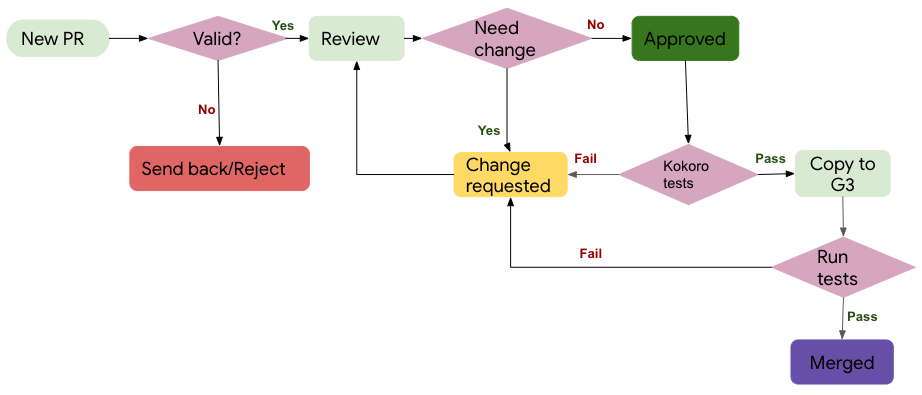 ### Typical Pull Request Workflow - **1. New PR** - As a contributor, you submit a New PR on GitHub. - We inspect every incoming PR and add certain labels to the PR such as `size:`,
Created: Tue Apr 07 12:39:13 GMT 2026 - Last Modified: Sat Jan 11 04:47:59 GMT 2025 - 15.9K bytes - Click Count (0) -
okhttp-tls/src/test/java/okhttp3/tls/internal/der/DerCertificatesTest.kt
          ),
        signatureValue =
          BitString(
            byteString = signatureBytes,
            unusedBitsCount = 0,
          ),
      ),
    )
  }

  @Test
  fun `decode typical certificate`() {
    val certificateBase64 =
      """
      |MIIHHTCCBgWgAwIBAgIRAL5oALmpH7l6AAAAAFTRMh0wDQYJKoZIhvcNAQELBQAw
      |gboxCzAJBgNVBAYTAlVTMRYwFAYDVQQKEw1FbnRydXN0LCBJbmMuMSgwJgYDVQQL
Created: Fri Apr 03 11:42:14 GMT 2026 - Last Modified: Wed Mar 19 19:25:20 GMT 2025 - 43.9K bytes - Click Count (0) -
guava-testlib/src/com/google/common/testing/ClassSanityTester.java
import junit.framework.AssertionFailedError;
import org.jspecify.annotations.NullUnmarked;
import org.jspecify.annotations.Nullable;

/**
 * Tester that runs automated sanity tests for any given class. A typical use case is to test static
 * factory classes like:
 *
 * <pre>
 * interface Book {...}
 * public class Books {
 *   public static Book hardcover(String title) {...}
Created: Fri Apr 03 12:43:13 GMT 2026 - Last Modified: Sat Aug 09 01:14:59 GMT 2025 - 32.5K bytes - Click Count (0) -
android/guava-tests/test/com/google/common/util/concurrent/GeneratedMonitorTest.java
        validateMethod(method);
        addTests(suite, method);
      }
    }

    assertEquals(980, suite.testCount());

    return suite;
  }

  /** A typical timeout value we'll use in the tests. */
  private static final long SMALL_TIMEOUT_MILLIS = 10;

  /** How long to wait when determining that a thread is blocked if we expect it to be blocked. */
Created: Fri Apr 03 12:43:13 GMT 2026 - Last Modified: Mon Mar 16 22:45:21 GMT 2026 - 26.7K bytes - Click Count (0) -
src/test/java/jcifs/internal/smb2/create/Smb2CloseResponseTest.java
            assertArrayEquals(testFileId, emptyNameResponse.getFileId());

            // Test with long fileName
            String longFileName = "a".repeat(255); // Maximum typical filename length
            Smb2CloseResponse longNameResponse = new Smb2CloseResponse(mockConfig, testFileId, longFileName);
            assertEquals(longFileName, longNameResponse.getFileName());
Created: Sun Apr 05 00:10:12 GMT 2026 - Last Modified: Thu Aug 14 05:31:44 GMT 2025 - 26.9K bytes - Click Count (0) -
guava/src/com/google/common/base/Predicates.java
   *
   * <p>If you want to filter an {@code Iterable} to narrow its type, consider using {@link
   * com.google.common.collect.Iterables#filter(Iterable, Class)} in preference.
   *
   * <p><b>Warning:</b> contrary to the typical assumptions about predicates (as documented at
   * {@link Predicate#apply}), the returned predicate may not be <i>consistent with equals</i>. For
Created: Fri Apr 03 12:43:13 GMT 2026 - Last Modified: Sun Mar 08 16:16:42 GMT 2026 - 26.6K bytes - Click Count (0) -
android/guava/src/com/google/common/base/Predicates.java
   *
   * <p>If you want to filter an {@code Iterable} to narrow its type, consider using {@link
   * com.google.common.collect.Iterables#filter(Iterable, Class)} in preference.
   *
   * <p><b>Warning:</b> contrary to the typical assumptions about predicates (as documented at
   * {@link Predicate#apply}), the returned predicate may not be <i>consistent with equals</i>. For
Created: Fri Apr 03 12:43:13 GMT 2026 - Last Modified: Sun Mar 08 16:16:42 GMT 2026 - 26.6K bytes - Click Count (0) -
guava-tests/test/com/google/common/util/concurrent/GeneratedMonitorTest.java
        validateMethod(method);
        addTests(suite, method);
      }
    }

    assertEquals(980, suite.testCount());

    return suite;
  }

  /** A typical timeout value we'll use in the tests. */
  private static final long SMALL_TIMEOUT_MILLIS = 10;

  /** How long to wait when determining that a thread is blocked if we expect it to be blocked. */
Created: Fri Apr 03 12:43:13 GMT 2026 - Last Modified: Mon Mar 16 22:45:21 GMT 2026 - 26.7K bytes - Click Count (0) -
okhttp/src/commonJvmAndroid/kotlin/okhttp3/internal/http2/Http2Connection.kt
 * A socket connection to a remote peer. A connection hosts streams which can send and receive
 * data.
 *
 * Many methods in this API are **synchronous:** the call is completed before the method returns.
 * This is typical for Java but atypical for HTTP/2. This is motivated by exception transparency:
 * an [IOException] that was triggered by a certain caller can be caught and handled by that caller.
 */
@Suppress("NAME_SHADOWING")
Created: Fri Apr 03 11:42:14 GMT 2026 - Last Modified: Tue Jan 27 09:00:39 GMT 2026 - 31.9K bytes - Click Count (0) -
okhttp/src/commonJvmAndroid/kotlin/okhttp3/internal/cache/DiskLruCache.kt
      field = value
      if (initialized) {
        cleanupQueue.schedule(cleanupTask) // Trim the existing store if necessary.
      }
    }

  /*
   * This cache uses a journal file named "journal". A typical journal file looks like this:
   *
   *     libcore.io.DiskLruCache
   *     1
   *     100
   *     2
   *
   *     CLEAN 3400330d1dfc7f3f7f4b8d4d803dfcf6 832 21054
Created: Fri Apr 03 11:42:14 GMT 2026 - Last Modified: Tue Jan 27 09:00:39 GMT 2026 - 34.7K bytes - Click Count (0)