- Sort Score
- Num 10 results
- Language All
Results 201 - 210 of 309 for declarar (0.06 seconds)
-
docs/en/docs/advanced/response-headers.md
You can declare a parameter of type `Response` in your *path operation function* (as you can do for cookies).

And then you can set headers in that *temporal* response object.

{* ../../docs_src/response_headers/tutorial002_py310.py hl[1, 7:8] *}

And then you can return any object you need, as you normally would (a `dict`, a database model, etc).
Created: Sun Apr 05 07:19:11 GMT 2026 - Last Modified: Thu Mar 05 18:13:19 GMT 2026 - 2.2K bytes - Click Count (0) -
docs/fr/docs/advanced/templates.md
---> 100%
```

</div>

## Utiliser `Jinja2Templates` { #using-jinja2templates }

- Importez `Jinja2Templates`.
- Créez un objet `templates` que vous pourrez réutiliser par la suite.
- Déclarez un paramètre `Request` dans le *chemin d'accès* qui renverra un template.
Created: Sun Apr 05 07:19:11 GMT 2026 - Last Modified: Thu Mar 19 18:37:13 GMT 2026 - 3.7K bytes - Click Count (0) -
docs/en/docs/tutorial/request-form-models.md
///

## Pydantic Models for Forms { #pydantic-models-for-forms }

You just need to declare a **Pydantic model** with the fields you want to receive as **form fields**, and then declare the parameter as `Form`:

{* ../../docs_src/request_form_models/tutorial001_an_py310.py hl[9:11,15] *}

**FastAPI** will **extract** the data for **each field** from the **form data** in the request and give you the Pydantic model you defined.
Created: Sun Apr 05 07:19:11 GMT 2026 - Last Modified: Thu Mar 05 18:13:19 GMT 2026 - 2.1K bytes - Click Count (0) -
android/guava/src/com/google/common/base/SneakyThrows.java
   * Throwable}. But we <i>can</i> write {@code sneakyThrow(t);}.
   *
   * <p>We sometimes also use {@code sneakyThrow} for testing how our code responds to
   * sneaky checked exception.
   *
   * @return never; this method declares a return type of {@link Error} only so that callers can
   *     write {@code throw sneakyThrow(t);} to convince the compiler that the statement will always
   *     throw.
   */
  @CanIgnoreReturnValue
Created: Fri Apr 03 12:43:13 GMT 2026 - Last Modified: Mon Feb 03 21:52:39 GMT 2025 - 2.4K bytes - Click Count (0) -
docs/fr/docs/tutorial/cors.md
Dans ce cas, la liste devrait inclure `http://localhost:8080` pour que le frontend `:8080` fonctionne correctement.

## Caractères génériques { #wildcards }

Il est également possible de déclarer la liste comme « * » (un « wildcard ») pour indiquer que toutes sont autorisées.
Created: Sun Apr 05 07:19:11 GMT 2026 - Last Modified: Thu Mar 19 18:37:13 GMT 2026 - 6.1K bytes - Click Count (0) -
docs/pt/docs/index.md
* A documentação alternativa também irá refletir o novo parâmetro query e o corpo: 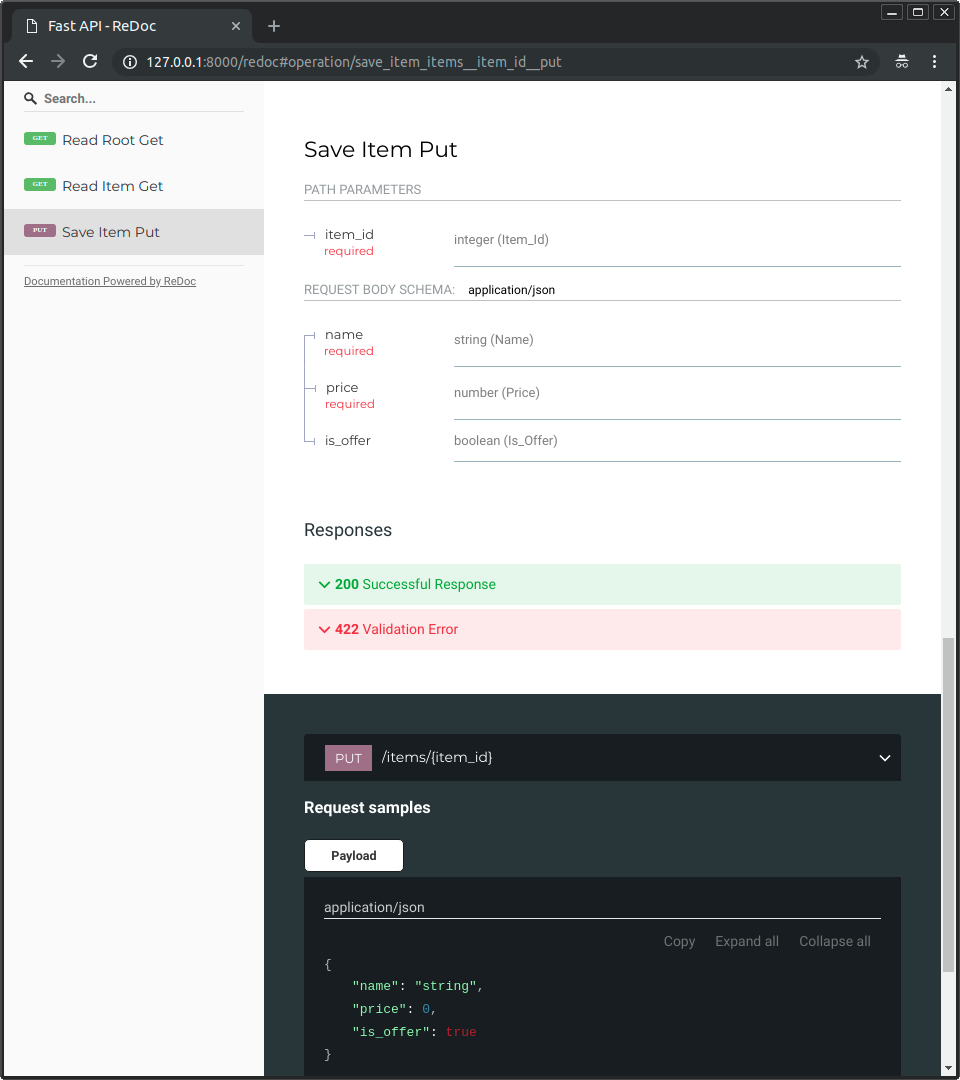 ### Recapitulando { #recap } Resumindo, você declara **uma vez** os tipos dos parâmetros, corpo etc. como parâmetros de função. Você faz isso com os tipos padrão do Python moderno.Created: Sun Apr 05 07:19:11 GMT 2026 - Last Modified: Thu Mar 19 18:20:43 GMT 2026 - 22.7K bytes - Click Count (0) -
docs/en/docs/advanced/using-request-directly.md
Created: Sun Apr 05 07:19:11 GMT 2026 - Last Modified: Thu Mar 05 18:13:19 GMT 2026 - 2.3K bytes - Click Count (0) -
build-tools-internal/src/main/java/org/elasticsearch/gradle/internal/test/rest/RestResourcesPlugin.java
 * declared to be copied.
 * <br>
 * <i>For example:</i>
 * <pre>
 * restResources {
 *   restApi {
 *     includeXpack 'enrich'
 *   }
 * }
 * </pre>
 * Will copy the entire core Rest API specifications (assuming the project has tests) and any of the the X-pack specs starting with enrich*.
Created: Wed Apr 08 16:19:15 GMT 2026 - Last Modified: Wed Jun 23 09:36:58 GMT 2021 - 6.4K bytes - Click Count (0) -
docs/fr/docs/tutorial/stream-json-lines.md
Si chaque élément JSON que vous voulez renvoyer est de type `Item` (un modèle Pydantic) et que c'est une fonction async, vous pouvez déclarer le type de retour comme `AsyncIterable[Item]` :

{* ../../docs_src/stream_json_lines/tutorial001_py310.py ln[1:24] hl[9:11,22] *}

Si vous déclarez le type de retour, FastAPI l'utilisera pour **valider** les données, les **documenter** dans OpenAPI, les **filtrer**, et les **sérialiser** avec Pydantic.
Created: Sun Apr 05 07:19:11 GMT 2026 - Last Modified: Thu Mar 19 18:33:45 GMT 2026 - 4.9K bytes - Click Count (0) -
docs/es/docs/advanced/events.md
Estas funciones pueden ser declaradas con `async def` o `def` normal.

### Evento `startup` { #startup-event }

Para añadir una función que debería ejecutarse antes de que la aplicación inicie, declárala con el evento `"startup"`:

{* ../../docs_src/events/tutorial001_py310.py hl[8] *}

En este caso, la función manejadora del evento `startup` inicializará los ítems de la "base de datos" (solo un `dict`) con algunos valores.
Created: Sun Apr 05 07:19:11 GMT 2026 - Last Modified: Thu Mar 19 18:15:55 GMT 2026 - 8.4K bytes - Click Count (0)