- Sort Score
- Num 10 results
- Language All
Results 71 - 80 of 726 for step (0.04 seconds)
-
ADDING_NEW_LANGUAGE.md
- **Language + Region**: `fess_label_pt_BR.properties`, `fess_label_zh_CN.properties`, `fess_label_zh_TW.properties`
- **Special cases**: Kurdish uses `fess_label_ckb_IQ.properties`

## Step-by-Step Guide

### 1. Create Language Resource Files

Copy the base English files as templates:

```bash
cd src/main/resources

# Copy label file (~1,056 translation entries)
Created: Tue Mar 31 13:07:34 GMT 2026 - Last Modified: Thu Nov 06 11:36:30 GMT 2025 - 10.4K bytes - Click Count (1) -
.teamcity/src/main/kotlin/common/CommonExtensions.kt
    init: GradleBuildStep.() -> Unit,
    custom: GradleBuildStep.() -> Unit,
): GradleBuildStep =
    GradleBuildStep(init)
        .apply(custom)
        .also {
            step(it)
        }

/**
 * Adds a [Gradle build step](https://confluence.jetbrains.com/display/TCDL/Gradle)
 * that runs with the Gradle wrapper.
 *
 * @see GradleBuildStep
 */
fun BuildSteps.gradleWrapper(
    buildType: BuildType? = null,
Created: Wed Apr 01 11:36:16 GMT 2026 - Last Modified: Fri Mar 13 05:03:56 GMT 2026 - 14.8K bytes - Click Count (0) -
cmd/namespace-lock_test.go
		//    successfully acquiring the lock.
		// 2) lk2 then needs to advance and remove the resource from lockMap.
		// 3) lk3 or lk4 (whichever didn't execute in step 1) then executes and creates
		//    a new entry in lockMap and acquires a lock for the same resource.

		<-lk2ch
		lk3ok := <-lk3ch
		lk4ok := <-lk4ch

		if lk3ok && lk4ok {
Created: Sun Apr 05 19:28:12 GMT 2026 - Last Modified: Fri Aug 29 02:39:48 GMT 2025 - 3K bytes - Click Count (0) -
docs/contribute/code_of_conduct.md
   questions. Those who are asked should be responsive and helpful.

 * **Step down considerately**: Members of every project come and go. When somebody leaves or
   disengages from the project, they should make it known and take the proper steps to ensure that
   others can pick up where they left off.
Created: Fri Apr 03 11:42:14 GMT 2026 - Last Modified: Sun Feb 06 02:19:09 GMT 2022 - 5.1K bytes - Click Count (0) -
.teamcity/README.md
Created: Wed Apr 01 11:36:16 GMT 2026 - Last Modified: Wed Mar 06 23:02:25 GMT 2024 - 4K bytes - Click Count (0) -
compat/maven-compat/src/main/java/org/apache/maven/settings/DefaultMavenSettingsBuilder.java
        // to specify the absolute path to these files in a customized components.xml
        // file. Ideally, we'd do full pattern-evaluation against the sysprops, but this
        // is a first step. There are several replacements below, in order to normalize
        // the path character before we operate on the string as a regex input, and
        // in order to avoid surprises with the File construction...
Created: Sun Apr 05 03:35:12 GMT 2026 - Last Modified: Fri Jun 06 14:28:57 GMT 2025 - 5.8K bytes - Click Count (0) -
docs/integrations/veeam/README.md
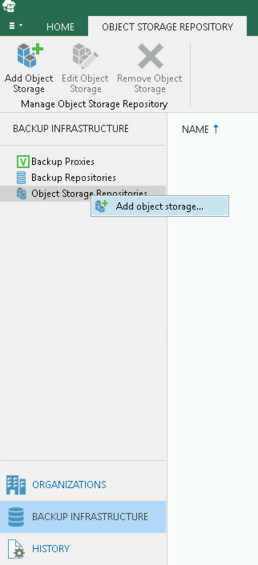 - Follow through the wizard as above for Veeam Backup and Replication as the steps are the same between both products - Under Backup Infrastructure -> Backup Repositories, right click and "Add Backup Repository"
Created: Sun Apr 05 19:28:12 GMT 2026 - Last Modified: Tue Aug 12 18:20:36 GMT 2025 - 5.5K bytes - Click Count (0) -
compat/maven-model-builder/src/main/java/org/apache/maven/model/building/ModelBuildingRequest.java
     * final invocation of the model builder is performed.
     *
     * @return {@code true} if two-phase building is enabled, {@code false} if the model should be built in a single
     *         step.
     */
    boolean isTwoPhaseBuilding();

    /**
     * Enables/disables two-phase building. If enabled, the initial invocation of the model builder will only produce an
Created: Sun Apr 05 03:35:12 GMT 2026 - Last Modified: Sat Apr 05 11:52:05 GMT 2025 - 12.8K bytes - Click Count (0) -
guava/src/com/google/common/base/SmallCharMatcher.java
    this.containsZero = containsZero;
  }

  private static final int C1 = 0xcc9e2d51;
  private static final int C2 = 0x1b873593;

  /*
   * This method was rewritten in Java from an intermediate step of the Murmur hash function in
   * http://code.google.com/p/smhasher/source/browse/trunk/MurmurHash3.cpp, which contained the
   * following header:
   *
Created: Fri Apr 03 12:43:13 GMT 2026 - Last Modified: Wed Feb 12 03:49:18 GMT 2025 - 4.5K bytes - Click Count (0) -
android/guava/src/com/google/common/base/SmallCharMatcher.java
    this.containsZero = containsZero;
  }

  private static final int C1 = 0xcc9e2d51;
  private static final int C2 = 0x1b873593;

  /*
   * This method was rewritten in Java from an intermediate step of the Murmur hash function in
   * http://code.google.com/p/smhasher/source/browse/trunk/MurmurHash3.cpp, which contained the
   * following header:
   *
Created: Fri Apr 03 12:43:13 GMT 2026 - Last Modified: Wed Feb 12 03:49:18 GMT 2025 - 4.5K bytes - Click Count (0)