- Sort Score
- Num 10 results
- Language All
Results 631 - 640 of 849 for halted (0.04 seconds)
-
android/guava/src/com/google/common/cache/Cache.java
   *
   * <p><b>Warning:</b> this cache may not be recording statistical data. For example, a cache
   * created using {@link CacheBuilder} only does so if the {@link CacheBuilder#recordStats} method
   * was called. If statistics are not being recorded, a {@code CacheStats} instance with zero for
   * all values is returned.
   *
   */
  CacheStats stats();

  /**
Created: Fri Apr 03 12:43:13 GMT 2026 - Last Modified: Sun Dec 22 03:38:46 GMT 2024 - 8.3K bytes - Click Count (0) -
src/main/java/org/codelibs/core/lang/MethodUtil.java
     *            The return type of the method
     * @param method
     *            The method. Cannot be {@literal null}
     * @param target
     *            The object on which the underlying method is to be called. {@literal null} for {@literal static} methods
     * @param args
     *            The arguments used for the method call
     * @return The result of dispatching the method to the object using the parameters {@code args}
Created: Fri Apr 03 20:58:12 GMT 2026 - Last Modified: Thu Jul 31 08:16:49 GMT 2025 - 12.6K bytes - Click Count (0) -
src/test/java/jcifs/internal/smb2/info/Smb2SetInfoRequestTest.java
            byte[] actualFileId = new byte[16];
            System.arraycopy(buffer, 80, actualFileId, 0, 16);
            assertArrayEquals(testFileId, actualFileId);

            // Verify that info.encode was called
            verify(mockInfo, times(1)).encode(any(byte[].class), anyInt());

            // Verify total bytes written
            assertTrue(bytesWritten > 32); // At least the fixed part plus some info
Created: Sun Apr 05 00:10:12 GMT 2026 - Last Modified: Thu Aug 14 05:31:44 GMT 2025 - 13.9K bytes - Click Count (0) -
docs/de/docs/features.md
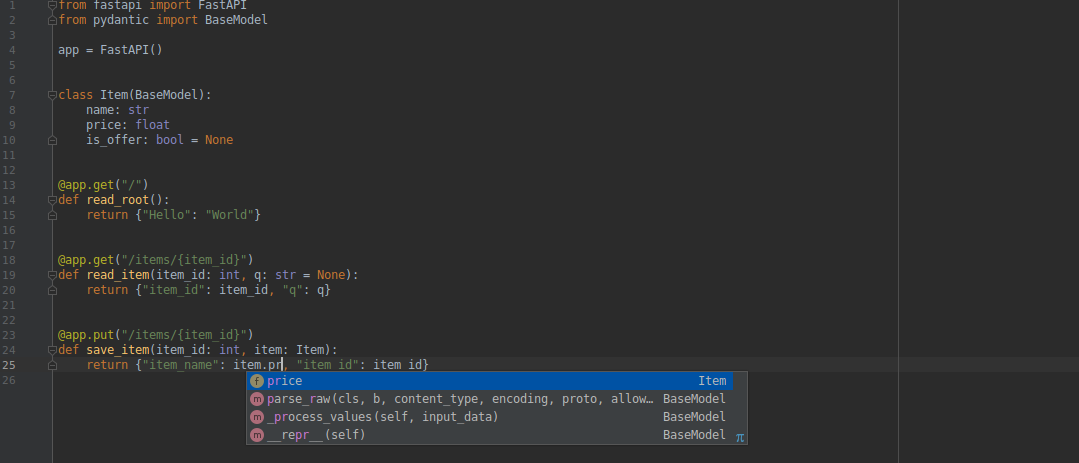 Sie bekommen sogar Autovervollständigung an Stellen, an denen Sie dies vorher nicht für möglich gehalten hätten. Zum Beispiel der `price` Schlüssel in einem JSON Datensatz (dieser könnte auch verschachtelt sein), der aus einem Request kommt.
Created: Sun Apr 05 07:19:11 GMT 2026 - Last Modified: Thu Mar 19 17:58:09 GMT 2026 - 10.3K bytes - Click Count (0) -
src/test/java/jcifs/smb/SIDTest.java
            // Arrange
            SID sid = new SID("S-1-5-21-1");

            // Act
            sid.resolve("server.example", mockCtx);

            // Assert: resolver.resolveSids called with this SID
            ArgumentCaptor<jcifs.SID[]> captor = ArgumentCaptor.forClass(jcifs.SID[].class);
            verify(mockResolver, times(1)).resolveSids(same(mockCtx), eq("server.example"), captor.capture());
Created: Sun Apr 05 00:10:12 GMT 2026 - Last Modified: Thu Aug 14 05:31:44 GMT 2025 - 15.8K bytes - Click Count (0) -
android/guava/src/com/google/common/collect/FluentIterable.java
   * fluent iterable.
   *
   * <p>That iterator supports {@code remove()} if {@code iterable.iterator()} does. After {@code
   * remove()} is called, subsequent cycles omit the removed element, which is no longer in this
   * fluent iterable. The iterator's {@code hasNext()} method returns {@code true} until this fluent
   * iterable is empty.
   *
Created: Fri Apr 03 12:43:13 GMT 2026 - Last Modified: Thu Apr 02 14:49:41 GMT 2026 - 34.7K bytes - Click Count (0) -
guava/src/com/google/common/collect/CompactHashMap.java
  //
  // Essentially, then, `table[h]` gives us the start of a linked list in `entries`, where every
  // element of the list has the short hash value h.
  //
  // A wrinkle here is that the value 0 (called UNSET in the code) is used as the equivalent of a
  // null pointer. If `table[h] == 0` that means there are no keys in the map whose short hash is h.
Created: Fri Apr 03 12:43:13 GMT 2026 - Last Modified: Tue Jul 08 18:32:10 GMT 2025 - 39.6K bytes - Click Count (0) -
guava/src/com/google/common/collect/FluentIterable.java
   * fluent iterable.
   *
   * <p>That iterator supports {@code remove()} if {@code iterable.iterator()} does. After {@code
   * remove()} is called, subsequent cycles omit the removed element, which is no longer in this
   * fluent iterable. The iterator's {@code hasNext()} method returns {@code true} until this fluent
   * iterable is empty.
   *
Created: Fri Apr 03 12:43:13 GMT 2026 - Last Modified: Thu Apr 02 14:49:41 GMT 2026 - 34.7K bytes - Click Count (0) -
guava/src/com/google/common/collect/Table.java
import java.util.Collection;
import java.util.Map;
import java.util.Objects;
import java.util.Set;
import org.jspecify.annotations.Nullable;

/**
 * A collection that associates an ordered pair of keys, called a row key and a column key, with a
 * single value. A table may be sparse, with only a small fraction of row key / column key pairs
 * possessing a corresponding value.
 *
Created: Fri Apr 03 12:43:13 GMT 2026 - Last Modified: Tue Jul 08 18:32:10 GMT 2025 - 10.5K bytes - Click Count (0) -
compat/maven-model-builder/src/main/java/org/apache/maven/model/interpolation/reflection/MethodMap.java
     * where this is needed - however, functionality
     * like this is needed.
     *
     * @param methodName name of method
     * @param args       the actual arguments with which the method is called
     * @return the most specific applicable method, or null if no
     *         method is applicable.
     * @throws AmbiguousException if there is more than one maximally
Created: Sun Apr 05 03:35:12 GMT 2026 - Last Modified: Tue Feb 25 08:27:34 GMT 2025 - 14.2K bytes - Click Count (0)