- Sort Score
- Num 10 results
- Language All
Results 551 - 560 of 1,178 for simple (0.06 seconds)
-
docs/pt/docs/python-types.md
Você acabou de ver o local principal para declarar type hints. Como parâmetros de função.

Este também é o principal local em que você os usaria com o **FastAPI**.

### Tipos simples { #simple-types }

Você pode declarar todos os tipos padrão de Python, não apenas `str`.

Você pode usar, por exemplo:

* `int`
* `float`
* `bool`
* `bytes`
Created: Sun Apr 05 07:19:11 GMT 2026 - Last Modified: Thu Mar 19 18:20:43 GMT 2026 - 11.7K bytes - Click Count (0) -
docs/fr/docs/advanced/openapi-callbacks.md
Cette documentation apparaîtra dans Swagger UI à `/docs` dans votre API, et permettra aux personnes développeuses externes de savoir comment construire l’*API externe*.

Cet exemple n’implémente pas le callback lui-même (qui pourrait être une simple ligne de code), uniquement la partie documentation.

/// tip | Astuce

Le callback réel n’est qu’une requête HTTP.
Created: Sun Apr 05 07:19:11 GMT 2026 - Last Modified: Thu Mar 19 18:37:13 GMT 2026 - 8.7K bytes - Click Count (0) -
docs/fr/docs/advanced/settings.md
{* ../../docs_src/settings/app02_an_py310/main.py hl[17,19:21] *}

### Paramètres et tests { #settings-and-testing }

Il devient alors très simple de fournir un autre objet de paramètres pendant les tests en créant une surcharge de dépendance pour `get_settings` :

{* ../../docs_src/settings/app02_an_py310/test_main.py hl[9:10,13,21] *}
Created: Sun Apr 05 07:19:11 GMT 2026 - Last Modified: Thu Mar 19 18:37:13 GMT 2026 - 12.3K bytes - Click Count (0) -
docs/fr/docs/deployment/concepts.md
### Sur un serveur distant { #in-a-remote-server }

Lorsque vous configurez un serveur distant (un serveur cloud, une machine virtuelle, etc.), la chose la plus simple à faire est d'utiliser `fastapi run` (qui utilise Uvicorn) ou quelque chose de similaire, manuellement, de la même manière que lorsque vous développez en local.

Et cela fonctionnera et sera utile **pendant le développement**.
Created: Sun Apr 05 07:19:11 GMT 2026 - Last Modified: Thu Mar 19 18:37:13 GMT 2026 - 21.4K bytes - Click Count (0) -
docs/fr/docs/tutorial/security/oauth2-jwt.md
Et vous pouvez utiliser et implémenter des protocoles sécurisés et standard, comme OAuth2, de manière relativement simple.
Created: Sun Apr 05 07:19:11 GMT 2026 - Last Modified: Thu Mar 19 18:37:13 GMT 2026 - 12.6K bytes - Click Count (0) -
docs/tr/docs/python-types.md
## Tipleri Bildirmek { #declaring-types }

Type hints bildirmek için ana yeri az önce gördünüz: fonksiyon parametreleri.

Bu, **FastAPI** ile kullanırken de onları en çok kullanacağınız yerdir.

### Basit tipler { #simple-types }

Sadece `str` değil, tüm standart Python tiplerini bildirebilirsiniz.

Örneğin şunları kullanabilirsiniz:

* `int`
* `float`
* `bool`
* `bytes`
Created: Sun Apr 05 07:19:11 GMT 2026 - Last Modified: Fri Mar 20 07:53:17 GMT 2026 - 11.9K bytes - Click Count (0) -
docs/uk/docs/python-types.md
## Оголошення типів { #declaring-types }

Щойно ви побачили основне місце для оголошення підказок типів. Як параметри функції.

Це також основне місце, де ви б їх використовували у **FastAPI**.

### Прості типи { #simple-types }

Ви можете оголошувати усі стандартні типи у Python, не тільки `str`.

Ви можете використовувати, наприклад:

* `int`
* `float`
* `bool`
* `bytes`
Created: Sun Apr 05 07:19:11 GMT 2026 - Last Modified: Thu Mar 19 18:27:41 GMT 2026 - 17.4K bytes - Click Count (0) -
docs/zh-hant/docs/index.md
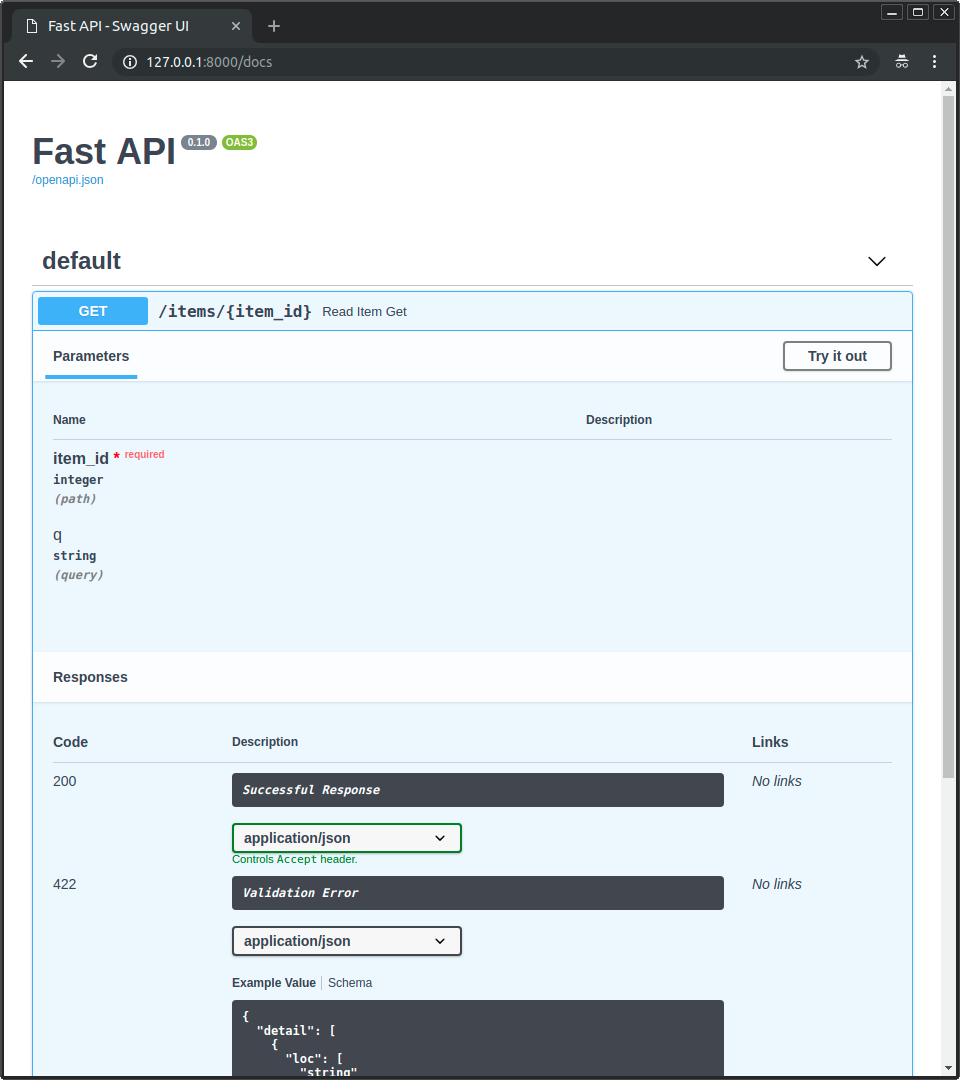 ### 替代 API 文件 { #alternative-api-docs } 現在前往 [http://127.0.0.1:8000/redoc](http://127.0.0.1:8000/redoc)。 你會看到另一種自動文件(由 [ReDoc](https://github.com/Rebilly/ReDoc) 提供): 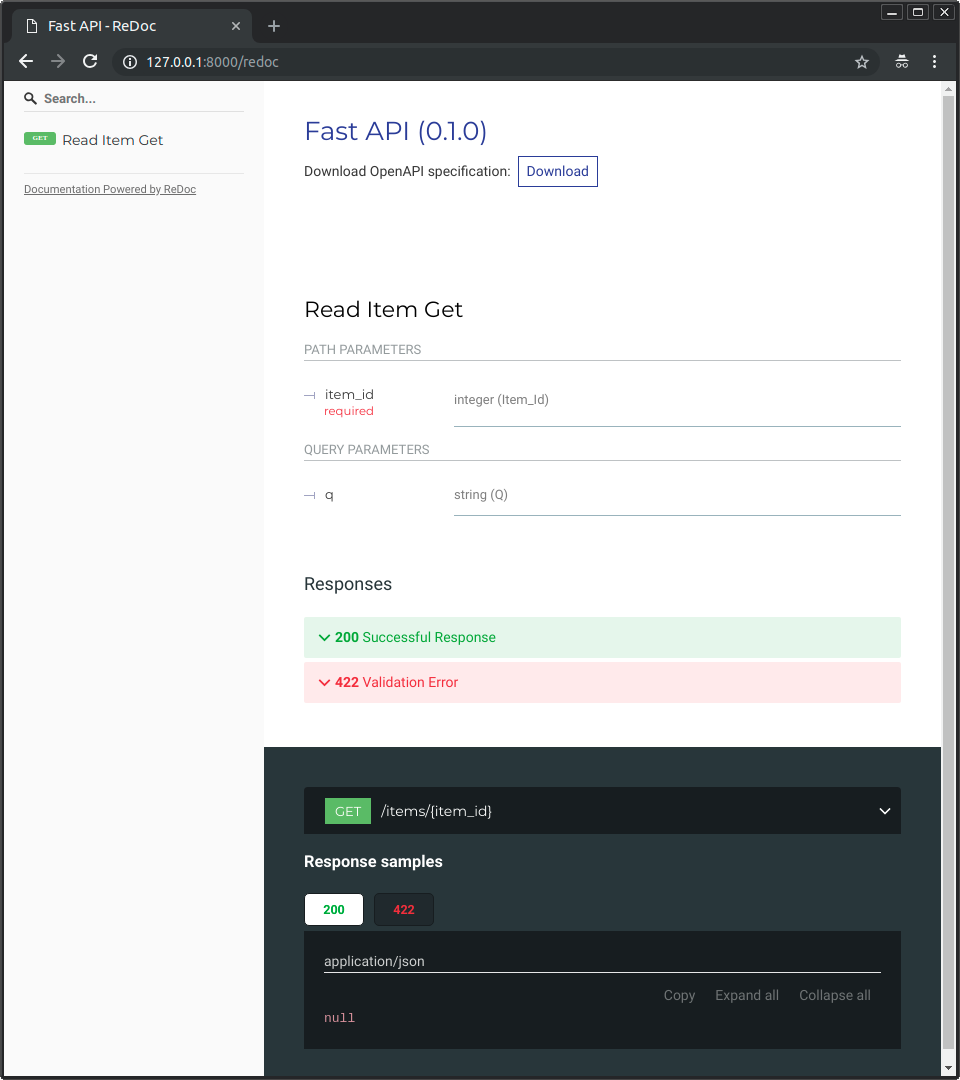 ## 範例升級 { #example-upgrade } 現在修改 `main.py` 檔案,使其能從 `PUT` 請求接收 body。Created: Sun Apr 05 07:19:11 GMT 2026 - Last Modified: Fri Mar 20 17:05:38 GMT 2026 - 20.8K bytes - Click Count (0) -
docs/es/docs/features.md
### "Plug-ins" ilimitados { #unlimited-plug-ins }

O de otra manera, no hay necesidad de ellos, importa y usa el código que necesitas.

Cualquier integración está diseñada para ser tan simple de usar (con dependencias) que puedes crear un "plug-in" para tu aplicación en 2 líneas de código usando la misma estructura y sintaxis utilizada para tus *path operations*.

### Probado { #tested }
Created: Sun Apr 05 07:19:11 GMT 2026 - Last Modified: Thu Mar 19 18:15:55 GMT 2026 - 10.1K bytes - Click Count (0) -
docs/ko/docs/tutorial/extra-models.md
* **출력 모델**은 비밀번호를 가지면 안 됩니다.
* **데이터베이스 모델**은 아마도 해시 처리된 비밀번호를 가질 필요가 있을 것입니다.

/// danger

절대 사용자의 비밀번호를 평문으로 저장하지 마세요. 항상 이후에 검증 가능한 "안전한 해시(secure hash)"로 저장하세요.

만약 이게 무엇인지 모르겠다면, [보안 장](security/simple-oauth2.md#password-hashing)에서 "password hash"가 무엇인지 배울 수 있습니다.

///

## 다중 모델 { #multiple-models }

아래는 비밀번호 필드와 해당 필드가 사용되는 위치를 포함하여, 각 모델들이 어떤 형태를 가질 수 있는지 전반적인 예시입니다:
Created: Sun Apr 05 07:19:11 GMT 2026 - Last Modified: Fri Mar 20 14:06:26 GMT 2026 - 8K bytes - Click Count (0)