- Sort Score
- Num 10 results
- Language All
Results 371 - 380 of 761 for limitTo (0.06 seconds)
-
docs/bucket/quota/README.md
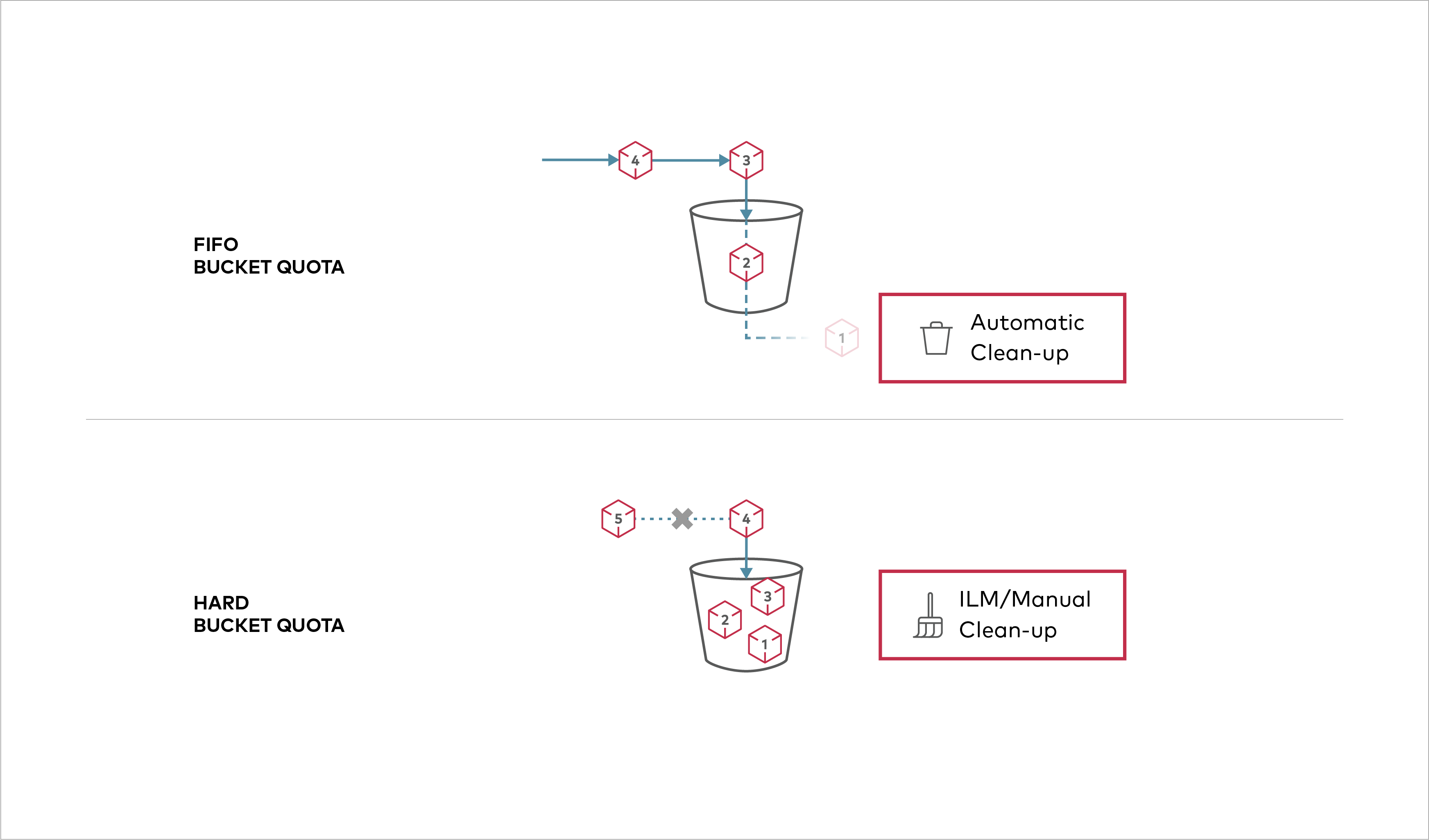 Buckets can be configured to have `Hard` quota - it disallows writes to the bucket after configured quota limit is reached. ## Prerequisites - Install MinIO - [MinIO Quickstart Guide](https://docs.min.io/community/minio-object-store/operations/deployments/baremetal-deploy-minio-on-redhat-linux.html#procedure).
Created: Sun Apr 05 19:28:12 GMT 2026 - Last Modified: Tue Aug 12 18:20:36 GMT 2025 - 1.1K bytes - Click Count (0) -
compat/maven-model-builder/src/main/java/org/apache/maven/model/profile/activation/FileProfileActivator.java
import org.codehaus.plexus.interpolation.InterpolationException;
import org.codehaus.plexus.util.StringUtils;

/**
 * Determines profile activation based on the existence/absence of some file.
 * File name interpolation support is limited to <code>${project.basedir}</code>
 * system properties and user properties.
 *
 * @see ActivationFile
 * @see org.apache.maven.model.validation.DefaultModelValidator#validateRawModel
Created: Sun Apr 05 03:35:12 GMT 2026 - Last Modified: Tue Feb 25 08:27:34 GMT 2025 - 4.4K bytes - Click Count (0) -
docs/es/docs/tutorial/security/get-current-user.md
Y puedes usar cualquier modelo o datos para los requisitos de seguridad (en este caso, un modelo de Pydantic `User`).

Pero no estás limitado a usar algún modelo de datos, clase o tipo específico.

¿Quieres tener un `id` y `email` y no tener un `username` en tu modelo? Claro. Puedes usar estas mismas herramientas.
Created: Sun Apr 05 07:19:11 GMT 2026 - Last Modified: Fri Feb 13 13:41:41 GMT 2026 - 4.4K bytes - Click Count (0) -
cmd/warm-backend-s3.go
				Transport: NewHTTPTransport(),
			},
		})
	case conf.AWSRoleWebIdentityTokenFile != "" && conf.AWSRoleARN != "":
		sessionName := conf.AWSRoleSessionName
		if sessionName == "" {
			// RoleSessionName has a limited set of characters (https://docs.aws.amazon.com/STS/latest/APIReference/API_AssumeRole.html)
			sessionName = "minio-tier-" + mustGetUUID()
		}
		s3WebIdentityIAM := credentials.IAM{
			Client: &http.Client{
Created: Sun Apr 05 19:28:12 GMT 2026 - Last Modified: Sun Jun 08 16:13:30 GMT 2025 - 5.8K bytes - Click Count (0) -
helm/minio/templates/_helpers.tpl
  {{- default .Chart.Name .Values.nameOverride | trunc 63 | trimSuffix "-" -}}
{{- end -}}

{{/*
Create a default fully qualified app name.
We truncate at 63 chars because some Kubernetes name fields are limited to this (by the DNS naming spec).
If release name contains chart name it will be used as a full name.
*/}}
{{- define "minio.fullname" -}}
  {{- if .Values.fullnameOverride -}}
Created: Sun Apr 05 19:28:12 GMT 2026 - Last Modified: Wed Aug 06 23:48:24 GMT 2025 - 6.4K bytes - Click Count (0) -
docs/uk/docs/tutorial/query-param-models.md
Наприклад, якщо клієнт спробує надіслати параметр запиту `tool` зі значенням `plumbus`, як у цьому запиті:

```http
https://example.com/items/?limit=10&tool=plumbus
```

Він отримає відповідь з **помилкою**, яка повідомить, що параметр запиту `tool` не дозволено:

```json
{
    "detail": [
        {
            "type": "extra_forbidden",
Created: Sun Apr 05 07:19:11 GMT 2026 - Last Modified: Fri Feb 13 12:42:01 GMT 2026 - 3.4K bytes - Click Count (0) -
android/guava-tests/test/com/google/common/collect/IteratorsTest.java
    assertThrows(IllegalArgumentException.class, () -> Iterators.limit(list.iterator(), -1));

    assertFalse(Iterators.limit(list.iterator(), 0).hasNext());
    assertFalse(Iterators.limit(list.iterator(), 1).hasNext());

    list.add("cool");
    assertFalse(Iterators.limit(list.iterator(), 0).hasNext());
    assertEquals(list, newArrayList(Iterators.limit(list.iterator(), 1)));
Created: Fri Apr 03 12:43:13 GMT 2026 - Last Modified: Fri Mar 13 13:01:07 GMT 2026 - 57.3K bytes - Click Count (0) -
cmd/object-api-datatypes.go
	// Indicates whether the returned list of multipart uploads is truncated. A
	// value of true indicates that the list was truncated. The list can be truncated
	// if the number of multipart uploads exceeds the limit allowed or specified
	// by max uploads.
	IsTruncated bool

	// List of all pending uploads.
	Uploads []MultipartInfo

	// When a prefix is provided in the request, The result contains only keys
Created: Sun Apr 05 19:28:12 GMT 2026 - Last Modified: Fri Aug 29 02:39:48 GMT 2025 - 21.2K bytes - Click Count (0) -
src/main/java/jcifs/internal/smb1/AndXServerMessageBlock.java
        return this.andx;
    }

    /**
     * Gets the batch limit for chained commands
     * @param cfg the configuration
     * @param cmd the command byte
     * @return the batch limit
     */
    protected int getBatchLimit(final Configuration cfg, final byte cmd) {
        /*
         * the default limit is 0 batched messages before this
         * one, meaning this message cannot be batched.
Created: Sun Apr 05 00:10:12 GMT 2026 - Last Modified: Sun Aug 31 08:00:57 GMT 2025 - 15.8K bytes - Click Count (0) -
cmd/metacache-entries.go
		case a[0].name < b[0].name:
			merged = append(merged, a[0])
			a = a[1:]
		default:
			merged = append(merged, b[0])
			b = b[1:]
		}
		if limit > 0 && len(merged) >= limit {
			break
		}
	}
	// Append anything left.
	if limit < 0 || len(merged) < limit {
		merged = append(merged, a...)
		merged = append(merged, b...)
	}
	m.o = merged
}
Created: Sun Apr 05 19:28:12 GMT 2026 - Last Modified: Thu Aug 08 15:29:58 GMT 2024 - 24.1K bytes - Click Count (0)