- Sort Score
- Num 10 results
- Language All
Results 301 - 310 of 1,178 for simple (0.04 seconds)
-
guava-tests/test/com/google/common/collect/QueuesTest.java
        new LinkedBlockingDeque<Object>(10),
        new PriorityBlockingQueue<Object>(10, Ordering.arbitrary()));
  }

  /*
   * We need to perform operations in a thread pool, even for simple cases, because the queue might
   * be a SynchronousQueue.
   */
  private ExecutorService threadPool;

  @Override
  public void setUp() {
    threadPool = newCachedThreadPool();
  }

  @Override
Created: Fri Apr 03 12:43:13 GMT 2026 - Last Modified: Tue Nov 04 17:24:58 GMT 2025 - 12.6K bytes - Click Count (0) -
docs/tls/README.md
### 3.1 Use `certgen` to Generate a Certificate

Download [`certgen`](https://github.com/minio/certgen/releases/latest) for your specific operating system and platform.

`certgen` is a simple *Go* tool to generate self-signed certificates, and provides SAN certificates with DNS and IP entries:

```sh
./certgen -host "10.10.0.3,10.10.0.4,10.10.0.5"
```

A response similar to this one should be displayed:
Created: Sun Apr 05 19:28:12 GMT 2026 - Last Modified: Tue Aug 12 18:20:36 GMT 2025 - 8.6K bytes - Click Count (0) -
docs/en/docs/virtual-environments.md
```

</div>

## Create a Virtual Environment { #create-a-virtual-environment }

When you start working on a Python project **for the first time**, create a virtual environment **<dfn title="there are other options, this is a simple guideline">inside your project</dfn>**.

/// tip

You only need to do this **once per project**, not every time you work.

///

//// tab | `venv`
Created: Sun Apr 05 07:19:11 GMT 2026 - Last Modified: Thu Mar 05 18:13:19 GMT 2026 - 22.1K bytes - Click Count (0) -
docs/es/docs/tutorial/first-steps.md
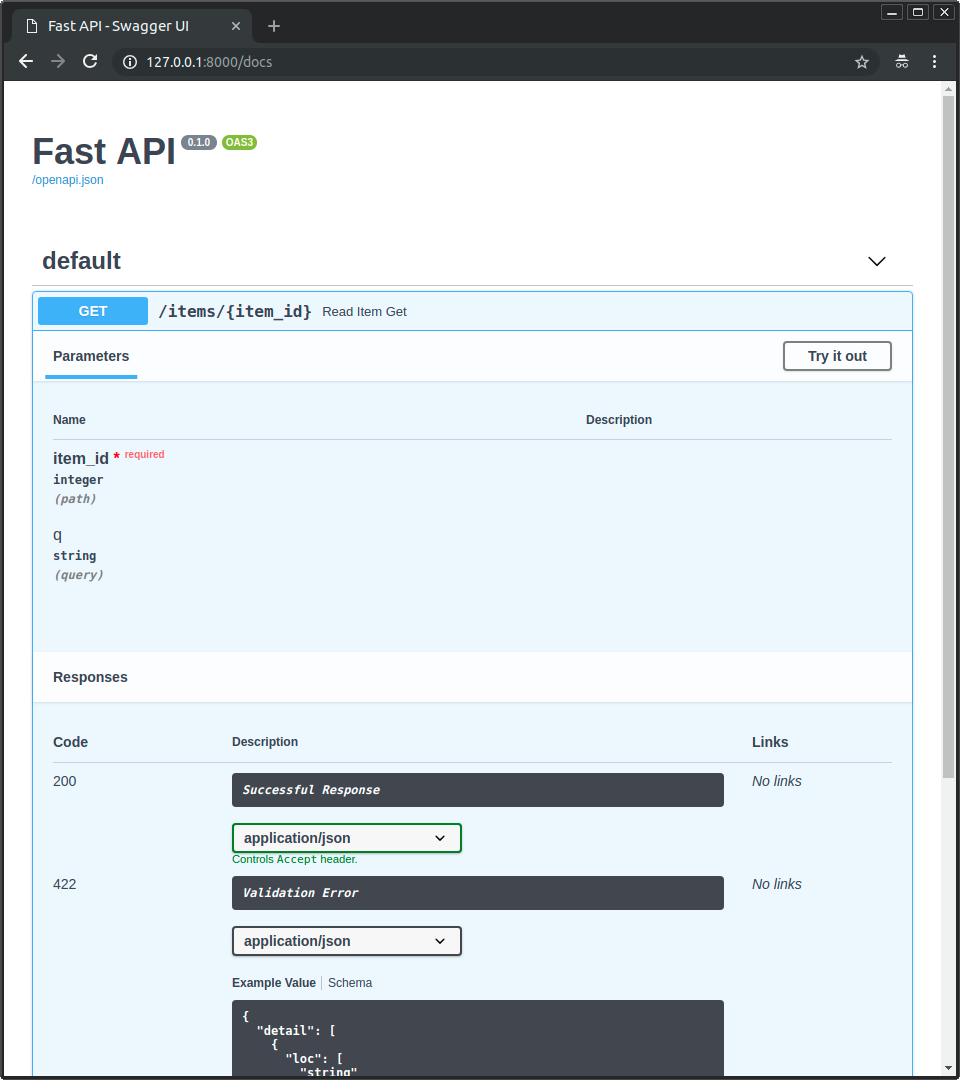 ### Documentación alternativa de la API { #alternative-api-docs } Y ahora, ve a [http://127.0.0.1:8000/redoc](http://127.0.0.1:8000/redoc). Verás la documentación alternativa automática (proporcionada por [ReDoc](https://github.com/Rebilly/ReDoc)): 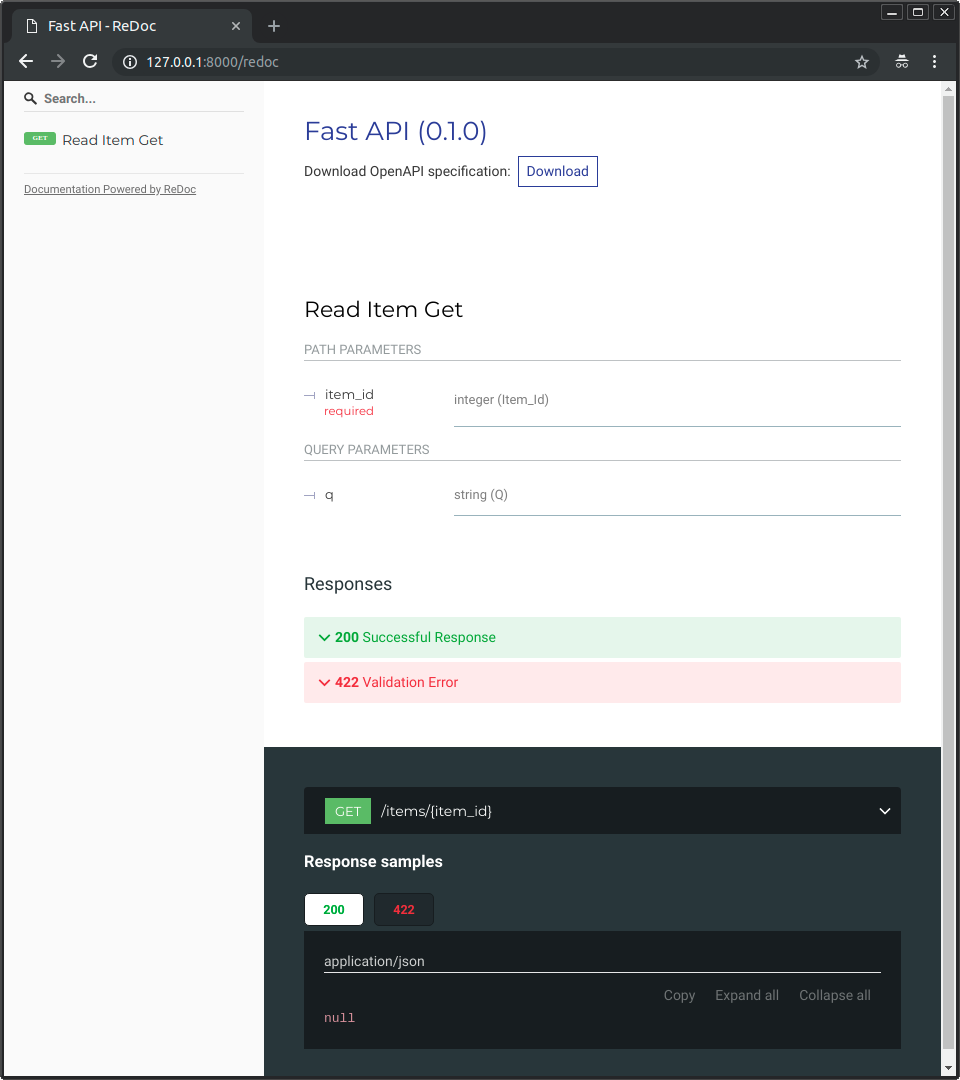 ### OpenAPI { #openapi }Created: Sun Apr 05 07:19:11 GMT 2026 - Last Modified: Thu Mar 19 18:15:55 GMT 2026 - 13.9K bytes - Click Count (0) -
docs/fr/docs/tutorial/first-steps.md
### Documentation alternative de l’API { #alternative-api-docs } Et maintenant, allez sur [http://127.0.0.1:8000/redoc](http://127.0.0.1:8000/redoc). Vous verrez la documentation automatique alternative (fournie par [ReDoc](https://github.com/Rebilly/ReDoc)) :  ### OpenAPI { #openapi }Created: Sun Apr 05 07:19:11 GMT 2026 - Last Modified: Thu Mar 19 18:37:13 GMT 2026 - 15.1K bytes - Click Count (0) -
architecture/standards/0006-use-of-provider-apis-in-gradle.md
The Gradle codebase has evolved over time and has a mixture of simple getter/setter methods, Provider API and things in between. It can be hard to follow best practices because Gradle provided types are reused in unexpected ways and extended by third party plugins.
Created: Wed Apr 01 11:36:16 GMT 2026 - Last Modified: Thu Mar 05 12:39:41 GMT 2026 - 10K bytes - Click Count (0) -
docs/en/docs/advanced/advanced-dependencies.md
{* ../../docs_src/dependencies/tutorial011_an_py310.py hl[22] *}

/// tip

All this might seem contrived. And it might not be very clear how is it useful yet.

These examples are intentionally simple, but show how it all works.

In the chapters about security, there are utility functions that are implemented in this same way.

If you understood all this, you already know how those utility tools for security work underneath.
Created: Sun Apr 05 07:19:11 GMT 2026 - Last Modified: Thu Mar 05 18:13:19 GMT 2026 - 9K bytes - Click Count (0) -
docs/ja/docs/tutorial/cors.md
### CORSプリフライトリクエスト { #cors-preflight-requests }

これらは、 `Origin` ヘッダーと `Access-Control-Request-Method` ヘッダーを持つ `OPTIONS` リクエストです。

この場合、ミドルウェアはリクエストを横取りし、適切なCORSヘッダーと共に情報提供のために `200` または `400` のレスポンスを返します。

### シンプルなリクエスト { #simple-requests }

`Origin` ヘッダーのあるリクエスト。この場合、ミドルウェアは通常どおりリクエストに何もしないですが、レスポンスに適切なCORSヘッダーを加えます。

## より詳しい情報 { #more-info }
Created: Sun Apr 05 07:19:11 GMT 2026 - Last Modified: Fri Mar 20 14:07:17 GMT 2026 - 6.8K bytes - Click Count (0) -
docs/changelogs/changelog_2x.md
 *  New: Add `Call.isExecuted()`.


## Version 2.6.0

_2015-11-22_

 *  **New Logging Interceptor.** The `logging-interceptor` subproject offers
    simple request and response logging. It may be configured to log headers and
    bodies for debugging. It requires this Maven dependency:

     ```xml
     <dependency>
       <groupId>com.squareup.okhttp</groupId>
Created: Fri Apr 03 11:42:14 GMT 2026 - Last Modified: Sun Feb 06 02:19:09 GMT 2022 - 26.6K bytes - Click Count (0) -
docs/en/docs/features.md
### Unlimited "plug-ins" { #unlimited-plug-ins }

Or in other way, no need for them, import and use the code you need.

Any integration is designed to be so simple to use (with dependencies) that you can create a "plug-in" for your application in 2 lines of code using the same structure and syntax used for your *path operations*.

### Tested { #tested }
Created: Sun Apr 05 07:19:11 GMT 2026 - Last Modified: Thu Mar 05 18:13:19 GMT 2026 - 8.9K bytes - Click Count (0)