- Sort Score
- Num 10 results
- Language All
Results 11 - 20 of 51 for lifetime (0.04 seconds)
The search processing time has exceeded the limit. The displayed results may be partial.
-
src/test/java/jcifs/smb/Kerb5AuthenticatorTest.java
        // Service accessors
        assertEquals("cifs", auth.getService());
        auth.setService("");
        assertEquals("", auth.getService());

        // Lifetime accessors (edge: zero/negative)
        auth.setUserLifeTime(0);
        assertEquals(0, auth.getUserLifeTime());
        auth.setUserLifeTime(-1);
        assertEquals(-1, auth.getUserLifeTime());
Created: Sun Apr 05 00:10:12 GMT 2026 - Last Modified: Thu Aug 14 05:31:44 GMT 2025 - 10.9K bytes - Click Count (0) -
docs/erasure/README.md
healing can be done only at the volume level which translates into high downtime. As MinIO encodes each object individually, it can heal objects incrementally. Storage servers once deployed should not require drive replacement or healing for the lifetime of the server. MinIO's erasure coded backend is designed for operational efficiency and takes full advantage of hardware acceleration whenever available. 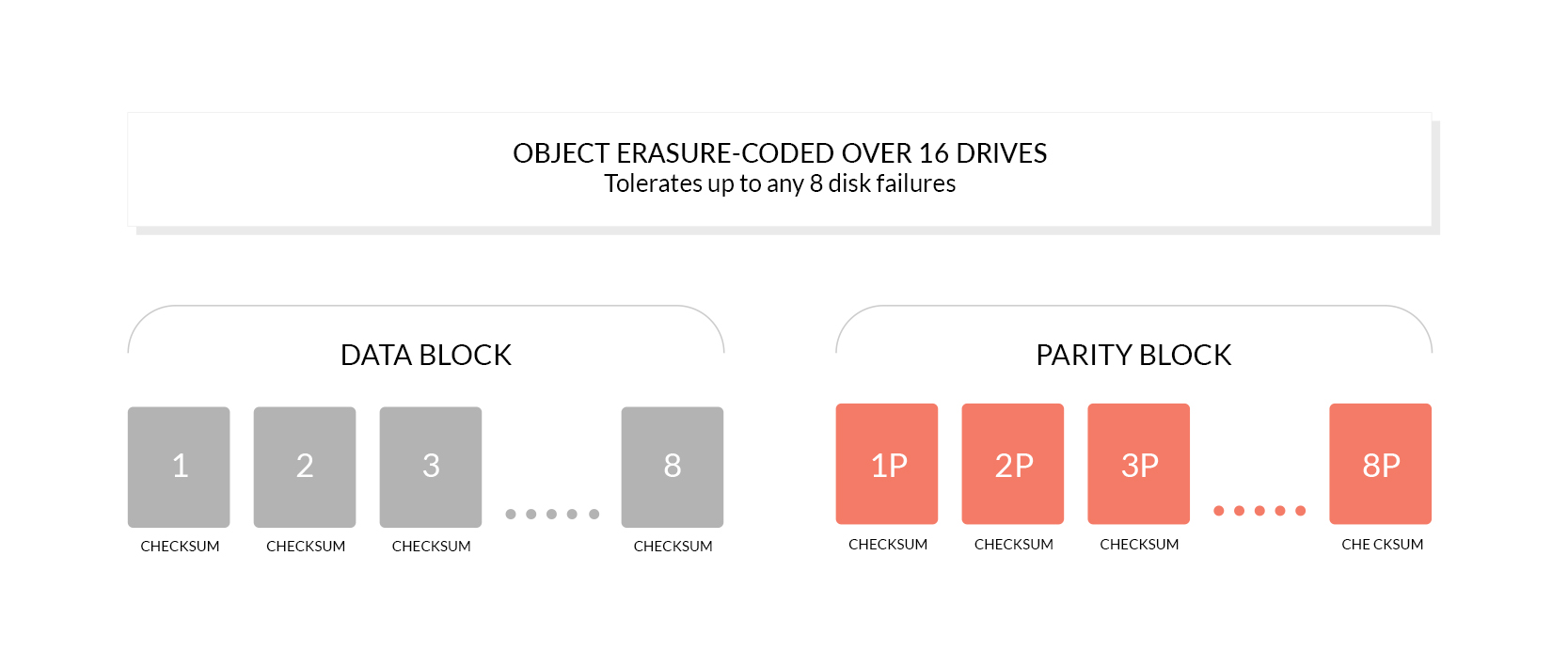...
Created: Sun Apr 05 19:28:12 GMT 2026 - Last Modified: Tue Aug 12 18:20:36 GMT 2025 - 4.2K bytes - Click Count (0) -
guava/src/com/google/common/cache/Cache.java
  /**
   * Returns a current snapshot of this cache's cumulative statistics, or a set of default values if
   * the cache is not recording statistics. All statistics begin at zero and never decrease over the
   * lifetime of the cache.
   *
   * <p><b>Warning:</b> this cache may not be recording statistical data. For example, a cache
   * created using {@link CacheBuilder} only does so if the {@link CacheBuilder#recordStats} method
Created: Fri Apr 03 12:43:13 GMT 2026 - Last Modified: Tue Mar 03 12:40:22 GMT 2026 - 8K bytes - Click Count (0) -
docs/sts/README.md
- Eliminates the need to embed long-term credentials with an application.
- Eliminates the need to provide access to buckets and objects without having to define static credentials.
- Temporary credentials have a limited lifetime, there is no need to rotate them or explicitly revoke them. Expired temporary credentials cannot be reused.

## Identity Federation
Created: Sun Apr 05 19:28:12 GMT 2026 - Last Modified: Tue Aug 12 18:20:36 GMT 2025 - 7.8K bytes - Click Count (0) -
docs/bucket/versioning/README.md
computationally difficult to guess. They are globally unique identifiers which can be locally generated without contacting a global registration authority. UUIDs are intended as unique identifiers for both mass tagging objects with an extremely short lifetime and to reliably identifying very persistent objects across a network.

When you PUT an object in a versioning-enabled bucket, the noncurrent version is not overwritten. The following figure shows that when a new version of `spark.csv` is...
Created: Sun Apr 05 19:28:12 GMT 2026 - Last Modified: Tue Aug 12 18:20:36 GMT 2025 - 12K bytes - Click Count (0) -
tensorflow/c/eager/immediate_execution_context.h
  virtual void ListDevices(std::vector<DeviceAttributes>* devices) = 0;

  // Add `devices` into context's device manager. Context's device manager
  // will take ownership and maintain devices' lifetime.
  virtual absl::Status AddDevices(
      std::vector<std::unique_ptr<Device>> devices) = 0;

  // Block until all pending nodes are finished.
  virtual absl::Status AsyncWait() = 0;
Created: Tue Apr 07 12:39:13 GMT 2026 - Last Modified: Sat Oct 12 05:11:17 GMT 2024 - 12.3K bytes - Click Count (0) -
okhttp/src/commonJvmAndroid/kotlin/okhttp3/CacheControl.kt
      val maxAgeSecondsLong = timeUnit.toSeconds(maxAge.toLong())
      this.maxAgeSeconds = maxAgeSecondsLong.commonClampToInt()
    }

    /**
     * Accept cached responses that have exceeded their freshness lifetime by up to `maxStale`. If
     * unspecified, stale cache responses will not be used.
     *
     * @param maxStale a non-negative integer. This is stored and transmitted with
Created: Fri Apr 03 11:42:14 GMT 2026 - Last Modified: Fri Dec 27 13:39:56 GMT 2024 - 10K bytes - Click Count (0) -
android/guava/src/com/google/common/cache/Cache.java
  /**
   * Returns a current snapshot of this cache's cumulative statistics, or a set of default values if
   * the cache is not recording statistics. All statistics begin at zero and never decrease over the
   * lifetime of the cache.
   *
   * <p><b>Warning:</b> this cache may not be recording statistical data. For example, a cache
   * created using {@link CacheBuilder} only does so if the {@link CacheBuilder#recordStats} method
Created: Fri Apr 03 12:43:13 GMT 2026 - Last Modified: Sun Dec 22 03:38:46 GMT 2024 - 8.3K bytes - Click Count (0) -
tensorflow/c/eager/dlpack.cc
#include "tensorflow/core/framework/tensor_reference.h"
#include "tensorflow/core/platform/logging.h"

namespace tensorflow {

namespace {

// Managing context for the DLManagedTensor, will manage the lifetime of
// DLManagedTensor. When calling DLManagedTensor::deleter, it will notify the
// original framework of destruction, and this context will be deleted also.
struct TfDlManagedTensorCtx {
  TensorReference reference;
Created: Tue Apr 07 12:39:13 GMT 2026 - Last Modified: Thu Mar 13 23:41:52 GMT 2025 - 13K bytes - Click Count (0) -
docs/en/docs/deployment/https.md
* For HTTPS, **the server** needs to **have "certificates"** generated by a **third party**.
    * Those certificates are actually **acquired** from the third party, not "generated".
* Certificates have a **lifetime**.
    * They **expire**.
    * And then they need to be **renewed**, **acquired again** from the third party.
* The encryption of the connection happens at the **TCP level**.
    * That's one layer **below HTTP**.
Created: Sun Apr 05 07:19:11 GMT 2026 - Last Modified: Thu Mar 05 18:13:19 GMT 2026 - 14K bytes - Click Count (0)