- Sort Score
- Result 10 results
- Languages All
Results 1081 - 1090 of 1,992 for Fastapi (0.04 sec)
-
tests/test_security_http_bearer.py
from fastapi import FastAPI, Security
from fastapi.security import HTTPAuthorizationCredentials, HTTPBearer
from fastapi.testclient import TestClient

app = FastAPI()

security = HTTPBearer()


@app.get("/users/me")
def read_current_user(credentials: HTTPAuthorizationCredentials = Security(security)):
    return {"scheme": credentials.scheme, "credentials": credentials.credentials}


client = TestClient(app)
Registered: Sun Dec 28 07:19:09 UTC 2025 - Last Modified: Mon Nov 24 19:03:06 UTC 2025 - 2.1K bytes - Viewed (0) -
tests/test_security_http_bearer_description.py
from fastapi import FastAPI, Security
from fastapi.security import HTTPAuthorizationCredentials, HTTPBearer
from fastapi.testclient import TestClient

app = FastAPI()

security = HTTPBearer(description="HTTP Bearer token scheme")


@app.get("/users/me")
def read_current_user(credentials: HTTPAuthorizationCredentials = Security(security)):
    return {"scheme": credentials.scheme, "credentials": credentials.credentials}
Registered: Sun Dec 28 07:19:09 UTC 2025 - Last Modified: Mon Nov 24 19:03:06 UTC 2025 - 2.3K bytes - Viewed (0) -
tests/test_security_http_digest_description.py
from fastapi import FastAPI, Security
from fastapi.security import HTTPAuthorizationCredentials, HTTPDigest
from fastapi.testclient import TestClient

app = FastAPI()

security = HTTPDigest(description="HTTPDigest scheme")


@app.get("/users/me")
def read_current_user(credentials: HTTPAuthorizationCredentials = Security(security)):
    return {"scheme": credentials.scheme, "credentials": credentials.credentials}


client = TestClient(app)
Registered: Sun Dec 28 07:19:09 UTC 2025 - Last Modified: Mon Nov 24 19:03:06 UTC 2025 - 2.3K bytes - Viewed (0) -
docs_src/path_operation_advanced_configuration/tutorial002_py39.py
from fastapi import FastAPI
from fastapi.routing import APIRoute

app = FastAPI()


@app.get("/items/")
async def read_items():
    return [{"item_id": "Foo"}]


def use_route_names_as_operation_ids(app: FastAPI) -> None:
    """
    Simplify operation IDs so that generated API clients have simpler function
    names.

    Should be called only after all routes have been added.
    """
    for route in app.routes:
Registered: Sun Dec 28 07:19:09 UTC 2025 - Last Modified: Wed Dec 17 20:41:43 UTC 2025 - 572 bytes - Viewed (0) -
tests/test_tutorial/test_path_operation_advanced_configurations/test_tutorial002.py
from fastapi.testclient import TestClient

from docs_src.path_operation_advanced_configuration.tutorial002_py39 import app

client = TestClient(app)


def test_get():
    response = client.get("/items/")
    assert response.status_code == 200, response.text
    assert response.json() == [{"item_id": "Foo"}]


def test_openapi_schema():
    response = client.get("/openapi.json")
    assert response.status_code == 200, response.text
Registered: Sun Dec 28 07:19:09 UTC 2025 - Last Modified: Wed Dec 17 20:41:43 UTC 2025 - 1K bytes - Viewed (0) -
docs/zh/docs/advanced/middleware.md
app = SomeASGIApp()

new_app = UnicornMiddleware(app, some_config="rainbow")
```

但 FastAPI(实际上是 Starlette)提供了一种更简单的方式,能让内部中间件在处理服务器错误的同时,还能让自定义异常处理器正常运作。

为此,要使用 `app.add_middleware()` (与 CORS 中的示例一样)。

```Python
from fastapi import FastAPI
from unicorn import UnicornMiddleware

app = FastAPI()

app.add_middleware(UnicornMiddleware, some_config="rainbow")
```
Registered: Sun Dec 28 07:19:09 UTC 2025 - Last Modified: Sat Oct 11 17:48:49 UTC 2025 - 3.5K bytes - Viewed (0) -
docs/uk/docs/tutorial/response-status-code.md
/// note | Технічні деталі

Ви також можете використати `from starlette import status`.

**FastAPI** надає ті ж самі змінні `starlette.status` як `fastapi.status`, просто для зручності розробника. Однак вони походять безпосередньо зі Starlette.

///

## Зміна значення за замовчуванням
Registered: Sun Dec 28 07:19:09 UTC 2025 - Last Modified: Wed Mar 19 17:04:17 UTC 2025 - 6.1K bytes - Viewed (0) -
scripts/translate.py
Registered: Sun Dec 28 07:19:09 UTC 2025 - Last Modified: Sat Dec 27 19:05:53 UTC 2025 - 34.1K bytes - Viewed (0) -
docs/de/docs/deployment/docker.md
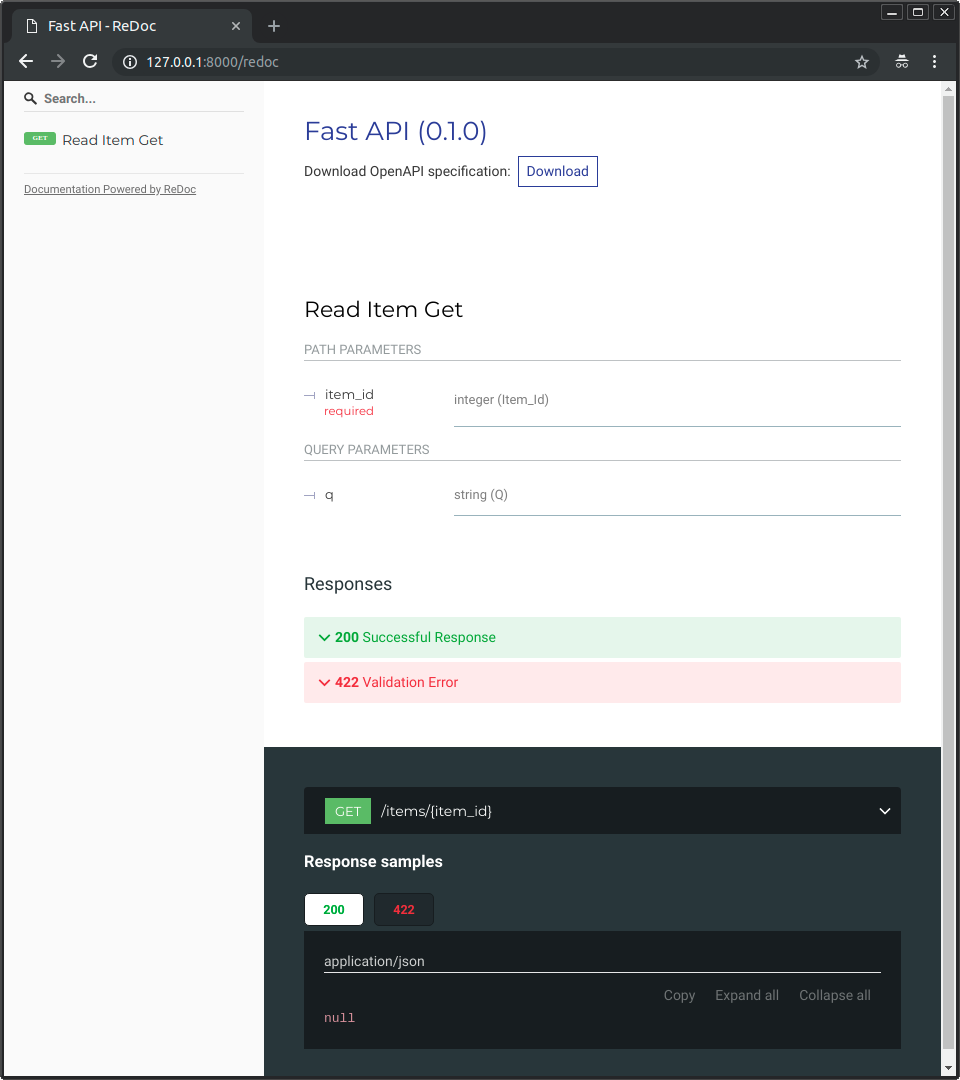 ## Ein Docker-Image mit einem Single-File-FastAPI erstellen { #build-a-docker-image-with-a-single-file-fastapi } Wenn Ihr FastAPI eine einzelne Datei ist, zum Beispiel `main.py` ohne ein `./app`-Verzeichnis, könnte Ihre Dateistruktur wie folgt aussehen: ```Registered: Sun Dec 28 07:19:09 UTC 2025 - Last Modified: Tue Dec 02 17:32:56 UTC 2025 - 33.6K bytes - Viewed (0) -
docs/es/docs/tutorial/query-param-models.md
/// note | Nota

Esto es compatible desde la versión `0.115.0` de FastAPI. 🤓

///

## Parámetros Query con un Modelo Pydantic { #query-parameters-with-a-pydantic-model }

Declara los **parámetros query** que necesitas en un **modelo de Pydantic**, y luego declara el parámetro como `Query`:

{* ../../docs_src/query_param_models/tutorial001_an_py310.py hl[9:13,17] *}
Registered: Sun Dec 28 07:19:09 UTC 2025 - Last Modified: Tue Dec 16 16:33:45 UTC 2025 - 2.3K bytes - Viewed (0)