- Sort Score
- Num 10 results
- Language All
Results 1 - 10 of 57 for veya (0.01 seconds)
-
docs/tr/docs/tutorial/first-steps.md
Created: Sun Dec 28 07:19:09 GMT 2025 - Last Modified: Sat Oct 11 17:48:49 GMT 2025 - 10.4K bytes - Click Count (0) -
docs/tr/docs/alternatives.md
Bununla birlikte, halihazırda birçok araç tarafından bir "standart" olarak kullanılmakta. Bu, Uvicorn'u farklı ASGI sunucularıyla (Daphne veya Hypercorn gibi) değiştirebileceğiniz veya `python-socketio` gibi ASGI ile uyumlu araçları ekleyebileciğiniz için birlikte çalışılabilirliği büyük ölçüde arttırıyor.

///

/// check | **FastAPI** nerede kullanıyor?
Created: Sun Dec 28 07:19:09 GMT 2025 - Last Modified: Sat Oct 11 17:48:49 GMT 2025 - 28.7K bytes - Click Count (0) -
docs/tr/docs/features.md
### Sadece modern Python

Tamamiyle standartlar **Python 3.8**'nın type hintlerine dayanıyor (Pydantic'in sayesinde). Yeni bir syntax öğrenmene gerek yok. Sadece modern Python.


Eğer Python type hintlerini bilmiyorsan veya bir hatırlatmaya ihtiyacın var ise(FastAPI kullanmasan bile) şu iki dakikalık küçük bilgilendirici içeriğe bir göz at: [Python Types](python-types.md){.internal-link target=_blank}.

Standart Python'u typelarını belirterek yazıyorsun:
Created: Sun Dec 28 07:19:09 GMT 2025 - Last Modified: Sat Oct 11 17:48:49 GMT 2025 - 11.1K bytes - Click Count (0) -
docs/tr/docs/index.md
Özetlemek gerekirse, parametrelerin, gövdenin, vb. veri tiplerini fonksiyon parametreleri olarak **bir kere** tanımlıyoruz.

Bu işlemi standart modern Python tipleriyle yapıyoruz.

Yeni bir sözdizimi yapısını, bir kütüphane özel metod veya sınıfları öğrenmeye gerek yoktur.

Hepsi sadece **Python** standartlarına dayalıdır.

Örnek olarak, `int` tanımlamak için:

```Python
item_id: int
```
Created: Sun Dec 28 07:19:09 GMT 2025 - Last Modified: Sat Oct 11 17:48:49 GMT 2025 - 21.9K bytes - Click Count (0) -
docs/pt/docs/tutorial/security/simple-oauth2.md
Para este exemplo simples, seremos completamente inseguros e retornaremos o mesmo `username` do token.

/// tip | Dica

No próximo capítulo, você verá uma implementação realmente segura, com hash de senha e tokens <abbr title="JSON Web Tokens">JWT</abbr>.

Mas, por enquanto, vamos nos concentrar nos detalhes específicos de que precisamos.

///
Created: Sun Dec 28 07:19:09 GMT 2025 - Last Modified: Wed Nov 12 16:23:57 GMT 2025 - 10.3K bytes - Click Count (0) -
docs/pt/docs/index.md
``` ...para: ```Python ... "item_price": item.price ... ``` ...e veja como seu editor irá auto-completar os atributos e saberá os tipos: 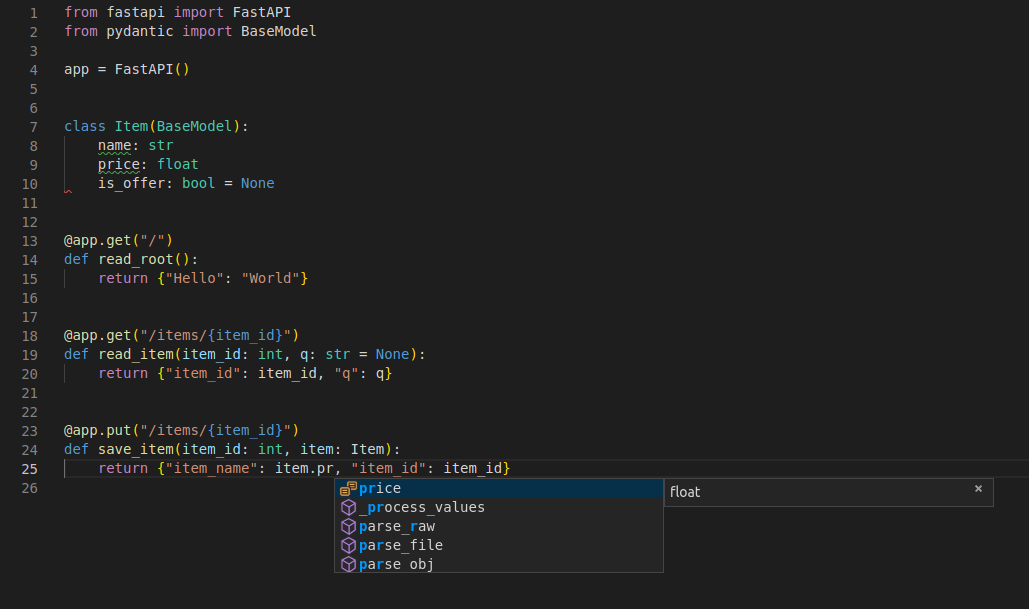 Para um exemplo mais completo incluindo mais recursos, veja <a href="https://fastapi.tiangolo.com/pt/tutorial/">Tutorial - Guia do Usuário</a>.Created: Sun Dec 28 07:19:09 GMT 2025 - Last Modified: Tue Dec 16 20:32:40 GMT 2025 - 24.5K bytes - Click Count (0) -
docs/pt/docs/tutorial/dependencies/index.md
Created: Sun Dec 28 07:19:09 GMT 2025 - Last Modified: Wed Nov 12 16:23:57 GMT 2025 - 10.7K bytes - Click Count (0) -
docs/pt/docs/advanced/openapi-callbacks.md
* O *path* pode conter uma <a href="https://github.com/OAI/OpenAPI-Specification/blob/master/versions/3.1.0.md#key-expression" class="external-link" target="_blank">expressão OpenAPI 3</a> (veja mais abaixo) em que pode usar variáveis com parâmetros e partes da solicitação original enviada para *sua API*.

### A expressão do path do callback { #the-callback-path-expression }
Created: Sun Dec 28 07:19:09 GMT 2025 - Last Modified: Tue Dec 16 20:32:40 GMT 2025 - 8.4K bytes - Click Count (0) -
docs/pt/docs/advanced/wsgi.md
Created: Sun Dec 28 07:19:09 GMT 2025 - Last Modified: Wed Dec 17 20:41:43 GMT 2025 - 1.2K bytes - Click Count (0) -
docs/pt/docs/_llm-test.md
//// tab | Informações

A única regra rígida para títulos é que o LLM deixe a parte do hash dentro de chaves inalterada, o que garante que os links não quebrem.

Veja a seção `### Headings` no prompt geral em `scripts/translate.py`.

Para algumas instruções específicas do idioma, veja, por exemplo, a seção `### Headings` em `docs/de/llm-prompt.md`.

////

## Termos usados na documentação { #terms-used-in-the-docs }

//// tab | Teste
Created: Sun Dec 28 07:19:09 GMT 2025 - Last Modified: Wed Dec 17 10:17:03 GMT 2025 - 12.4K bytes - Click Count (0)