- Sort Score
- Num 10 results
- Language All
Results 1 - 10 of 608 for simplest (0.05 seconds)
-
guava-testlib/src/com/google/common/testing/EqualsTester.java
import java.util.ArrayList;
import java.util.List;
import org.jspecify.annotations.NullMarked;
import org.jspecify.annotations.Nullable;

/**
 * Tester for equals() and hashCode() methods of a class.
 *
 * <p>The simplest use case is:
 *
 * <pre>
 * new EqualsTester().addEqualityGroup(foo).testEquals();
 * </pre>
 *
 * <p>This tests {@code foo.equals(foo)}, {@code foo.equals(null)}, and a few other operations.
 *
Created: Fri Apr 03 12:43:13 GMT 2026 - Last Modified: Sat Aug 09 01:14:59 GMT 2025 - 6.1K bytes - Click Count (0) -
docs/en/docs/advanced/security/http-basic-auth.md
## Simple HTTP Basic Auth { #simple-http-basic-auth }

* Import `HTTPBasic` and `HTTPBasicCredentials`.
* Create a "`security` scheme" using `HTTPBasic`.
* Use that `security` with a dependency in your *path operation*.
* It returns an object of type `HTTPBasicCredentials`:
    * It contains the `username` and `password` sent.
Created: Sun Apr 05 07:19:11 GMT 2026 - Last Modified: Thu Mar 05 18:13:19 GMT 2026 - 5K bytes - Click Count (0) -
docs/en/docs/advanced/websockets.md
---

But for this example, we'll use a very simple HTML document with some JavaScript, all inside a long string.

This, of course, is not optimal and you wouldn't use it for production.

In production you would have one of the options above.

But it's the simplest way to focus on the server-side of WebSockets and have a working example:
Created: Sun Apr 05 07:19:11 GMT 2026 - Last Modified: Sat Mar 07 09:29:03 GMT 2026 - 5.3K bytes - Click Count (0) -
android/guava-testlib/src/com/google/common/testing/EqualsTester.java
import java.util.ArrayList;
import java.util.List;
import org.jspecify.annotations.NullMarked;
import org.jspecify.annotations.Nullable;

/**
 * Tester for equals() and hashCode() methods of a class.
 *
 * <p>The simplest use case is:
 *
 * <pre>
 * new EqualsTester().addEqualityGroup(foo).testEquals();
 * </pre>
 *
 * <p>This tests {@code foo.equals(foo)}, {@code foo.equals(null)}, and a few other operations.
 *
Created: Fri Apr 03 12:43:13 GMT 2026 - Last Modified: Sat Aug 09 01:14:59 GMT 2025 - 6.1K bytes - Click Count (0) -
android/guava/src/com/google/common/collect/ImmutableCollection.java
    for (E e : this) {
      dst[offset++] = e;
    }
    return offset;
  }

  @J2ktIncompatible
  @GwtIncompatible
    Object writeReplace() {
    // We serialize by default to ImmutableList, the simplest thing that works.
    return new ImmutableList.SerializedForm(toArray());
  }

  @J2ktIncompatible // serialization
  private void readObject(ObjectInputStream stream) throws InvalidObjectException {
Created: Fri Apr 03 12:43:13 GMT 2026 - Last Modified: Thu Jan 29 22:14:05 GMT 2026 - 21.4K bytes - Click Count (0) -
docs/en/docs/deployment/concepts.md
### In a Remote Server { #in-a-remote-server }

When you set up a remote server (a cloud server, a virtual machine, etc.) the simplest thing you can do is use `fastapi run` (which uses Uvicorn) or something  similar, manually, the same way you do when developing locally.

And it will work and will be useful **during development**.
Created: Sun Apr 05 07:19:11 GMT 2026 - Last Modified: Thu Mar 05 18:13:19 GMT 2026 - 18.5K bytes - Click Count (1) -
android/guava/src/com/google/common/graph/Graph.java
 *
 * <p>There are three primary interfaces provided to represent graphs. In order of increasing
 * complexity they are: {@link Graph}, {@link ValueGraph}, and {@link Network}. You should generally
 * prefer the simplest interface that satisfies your use case. See the <a
 * href="https://github.com/google/guava/wiki/GraphsExplained#choosing-the-right-graph-type">
 * "Choosing the right graph type"</a> section of the Guava User Guide for more details.
Created: Fri Apr 03 12:43:13 GMT 2026 - Last Modified: Wed Mar 11 01:10:31 GMT 2026 - 13.6K bytes - Click Count (0) -
docs/en/docs/tutorial/first-steps.md
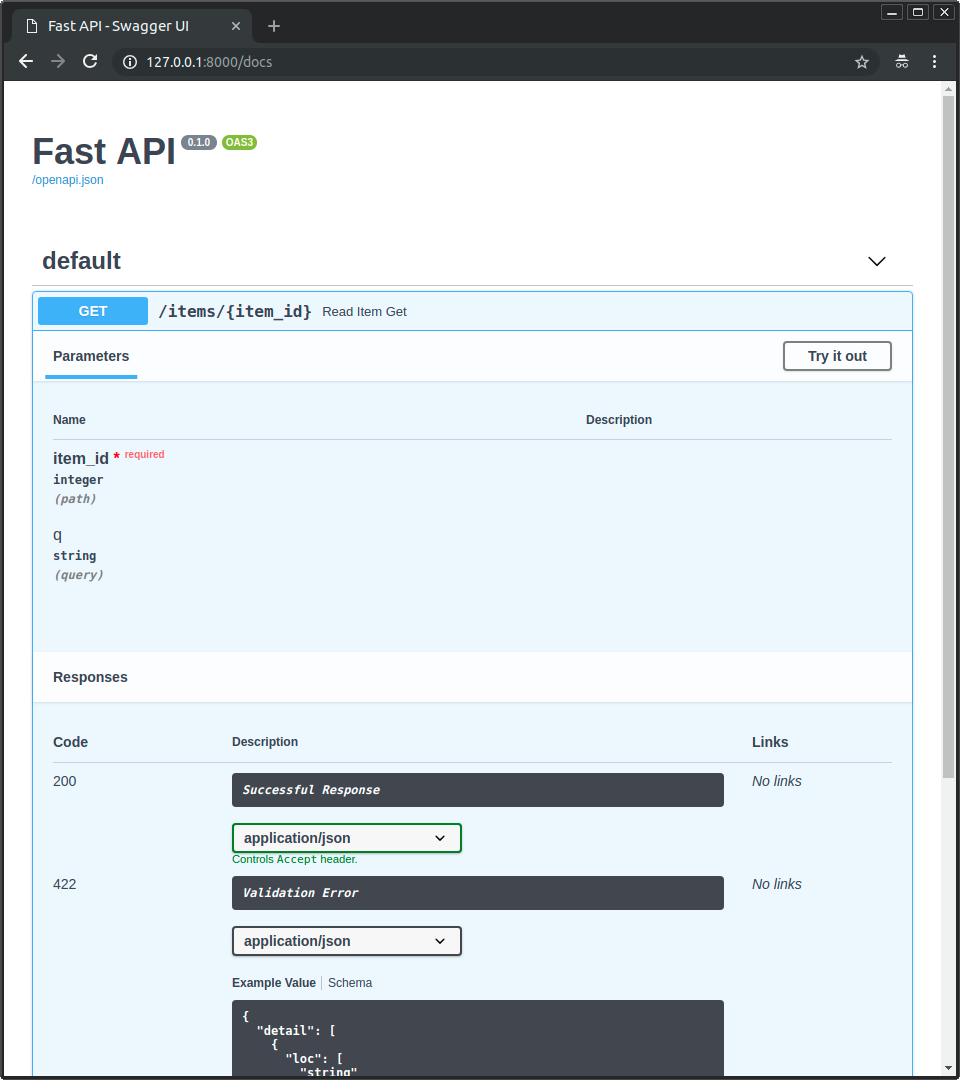 ### Alternative API docs { #alternative-api-docs } And now, go to [http://127.0.0.1:8000/redoc](http://127.0.0.1:8000/redoc). You will see the alternative automatic documentation (provided by [ReDoc](https://github.com/Rebilly/ReDoc)): 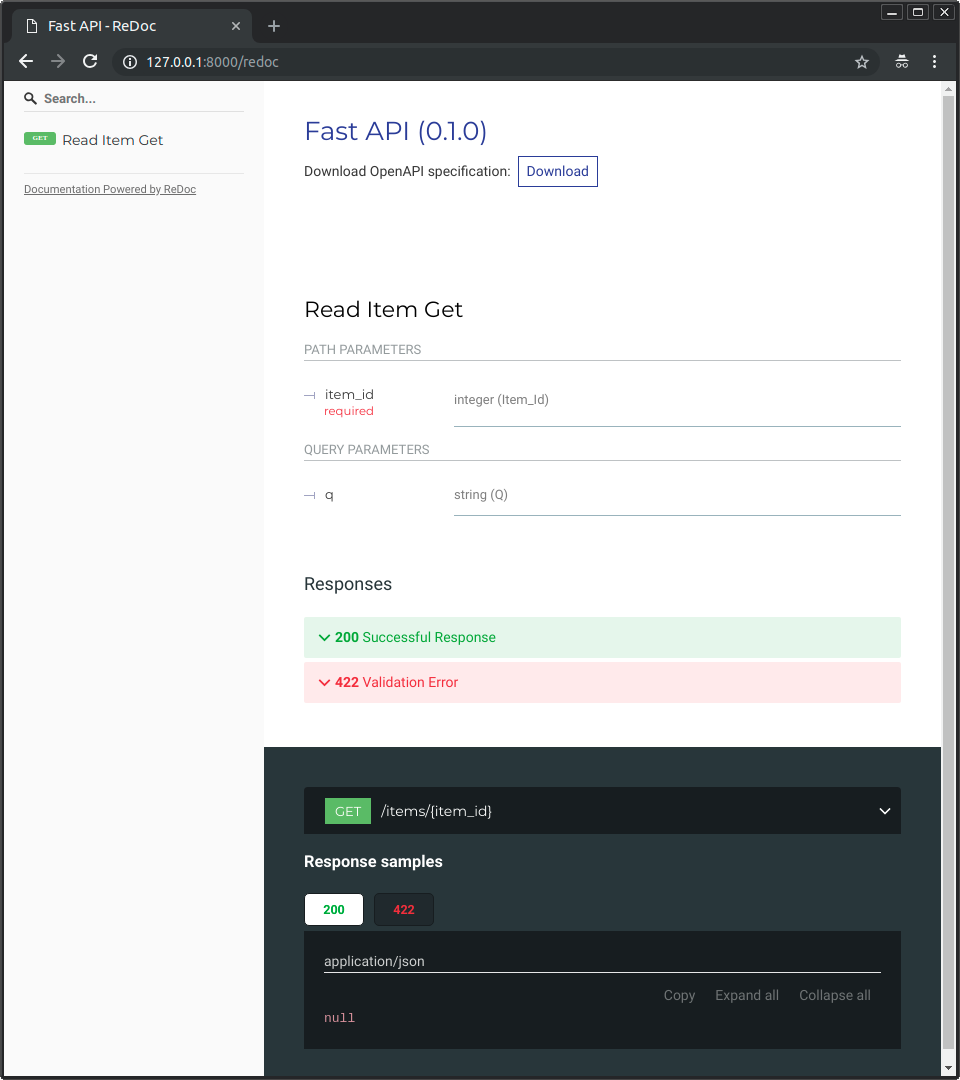 ### OpenAPI { #openapi }Created: Sun Apr 05 07:19:11 GMT 2026 - Last Modified: Sat Mar 07 09:29:03 GMT 2026 - 13.4K bytes - Click Count (0) -
guava/src/com/google/common/collect/ImmutableCollection.java
    for (E e : this) {
      dst[offset++] = e;
    }
    return offset;
  }

  @J2ktIncompatible
  @GwtIncompatible
    Object writeReplace() {
    // We serialize by default to ImmutableList, the simplest thing that works.
    return new ImmutableList.SerializedForm(toArray());
  }

  @J2ktIncompatible // serialization
  private void readObject(ObjectInputStream stream) throws InvalidObjectException {
Created: Fri Apr 03 12:43:13 GMT 2026 - Last Modified: Thu Jan 29 22:14:05 GMT 2026 - 18.7K bytes - Click Count (0) -
android/guava/src/com/google/common/primitives/Bytes.java
   * @return a hash code for the value
   */
  @InlineMe(replacement = "Byte.hashCode(value)")
  @InlineMeValidationDisabled(
      "The hash code of a byte is the int version of the byte itself, so it's simplest to return"
          + " that.")
  public static int hashCode(byte value) {
    return value;
  }

  /**
   * Returns {@code true} if {@code target} is present as an element anywhere in {@code array}.
   *
Created: Fri Apr 03 12:43:13 GMT 2026 - Last Modified: Thu Jul 17 15:26:41 GMT 2025 - 15.6K bytes - Click Count (0)