- Sort Score
- Num 10 results
- Language All
Results 1 - 10 of 356 for simplest (0.09 seconds)
-
android/guava/src/com/google/common/collect/ImmutableCollection.java
    for (E e : this) {
      dst[offset++] = e;
    }
    return offset;
  }

  @J2ktIncompatible
  @GwtIncompatible
    Object writeReplace() {
    // We serialize by default to ImmutableList, the simplest thing that works.
    return new ImmutableList.SerializedForm(toArray());
  }

  @J2ktIncompatible // serialization
  private void readObject(ObjectInputStream stream) throws InvalidObjectException {
Created: Fri Apr 03 12:43:13 GMT 2026 - Last Modified: Thu Jan 29 22:14:05 GMT 2026 - 21.4K bytes - Click Count (0) -
okhttp/src/jvmTest/kotlin/okhttp3/MultipartReaderTest.kt
    val multipart =
      """
      |--simple boundary
      |
      |abcd
      |--simple boundary--
      """.trimMargin()
        .replace(Regex("(?m)simple boundary$"), "simple boundary \t \t")
        .replace("\n", "\r\n")

    val parts =
      MultipartReader(
        boundary = "simple boundary",
        source = Buffer().writeUtf8(multipart),
      )
Created: Fri Apr 03 11:42:14 GMT 2026 - Last Modified: Wed May 28 02:11:14 GMT 2025 - 15.4K bytes - Click Count (0) -
docs/en/docs/deployment/concepts.md
### In a Remote Server { #in-a-remote-server }

When you set up a remote server (a cloud server, a virtual machine, etc.) the simplest thing you can do is use `fastapi run` (which uses Uvicorn) or something  similar, manually, the same way you do when developing locally.

And it will work and will be useful **during development**.
Created: Sun Apr 05 07:19:11 GMT 2026 - Last Modified: Thu Mar 05 18:13:19 GMT 2026 - 18.5K bytes - Click Count (1) -
android/guava/src/com/google/common/graph/Graph.java
 *
 * <p>There are three primary interfaces provided to represent graphs. In order of increasing
 * complexity they are: {@link Graph}, {@link ValueGraph}, and {@link Network}. You should generally
 * prefer the simplest interface that satisfies your use case. See the <a
 * href="https://github.com/google/guava/wiki/GraphsExplained#choosing-the-right-graph-type">
 * "Choosing the right graph type"</a> section of the Guava User Guide for more details.
Created: Fri Apr 03 12:43:13 GMT 2026 - Last Modified: Wed Mar 11 01:10:31 GMT 2026 - 13.6K bytes - Click Count (0) -
docs/en/docs/tutorial/first-steps.md
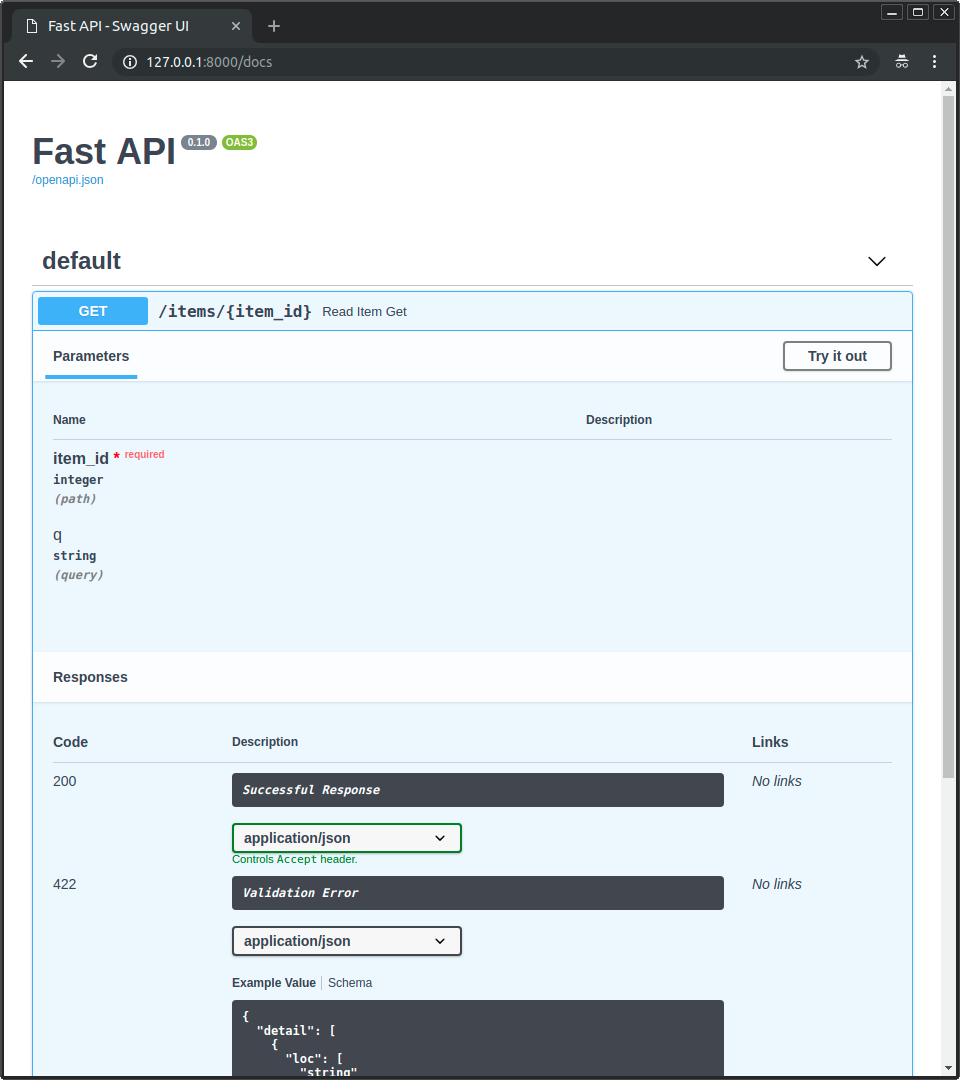 ### Alternative API docs { #alternative-api-docs } And now, go to [http://127.0.0.1:8000/redoc](http://127.0.0.1:8000/redoc). You will see the alternative automatic documentation (provided by [ReDoc](https://github.com/Rebilly/ReDoc)): 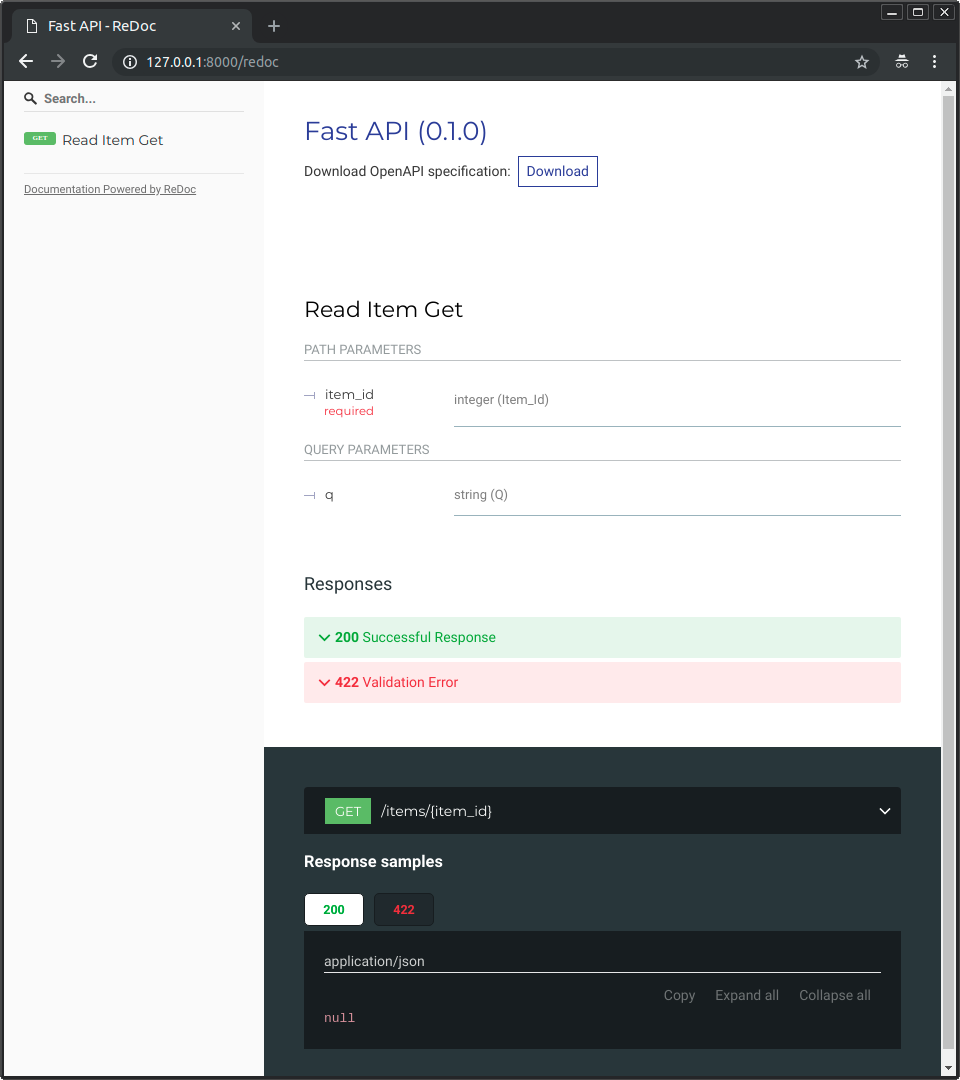 ### OpenAPI { #openapi }Created: Sun Apr 05 07:19:11 GMT 2026 - Last Modified: Sat Mar 07 09:29:03 GMT 2026 - 13.4K bytes - Click Count (0) -
guava/src/com/google/common/collect/ImmutableCollection.java
    for (E e : this) {
      dst[offset++] = e;
    }
    return offset;
  }

  @J2ktIncompatible
  @GwtIncompatible
    Object writeReplace() {
    // We serialize by default to ImmutableList, the simplest thing that works.
    return new ImmutableList.SerializedForm(toArray());
  }

  @J2ktIncompatible // serialization
  private void readObject(ObjectInputStream stream) throws InvalidObjectException {
Created: Fri Apr 03 12:43:13 GMT 2026 - Last Modified: Thu Jan 29 22:14:05 GMT 2026 - 18.7K bytes - Click Count (0) -
android/guava/src/com/google/common/primitives/Bytes.java
   * @return a hash code for the value
   */
  @InlineMe(replacement = "Byte.hashCode(value)")
  @InlineMeValidationDisabled(
      "The hash code of a byte is the int version of the byte itself, so it's simplest to return"
          + " that.")
  public static int hashCode(byte value) {
    return value;
  }

  /**
   * Returns {@code true} if {@code target} is present as an element anywhere in {@code array}.
   *
Created: Fri Apr 03 12:43:13 GMT 2026 - Last Modified: Thu Jul 17 15:26:41 GMT 2025 - 15.6K bytes - Click Count (0) -
android/guava/src/com/google/common/graph/ValueGraph.java
 *
 * <p>There are three primary interfaces provided to represent graphs. In order of increasing
 * complexity they are: {@link Graph}, {@link ValueGraph}, and {@link Network}. You should generally
 * prefer the simplest interface that satisfies your use case. See the <a
 * href="https://github.com/google/guava/wiki/GraphsExplained#choosing-the-right-graph-type">
 * "Choosing the right graph type"</a> section of the Guava User Guide for more details.
Created: Fri Apr 03 12:43:13 GMT 2026 - Last Modified: Wed Mar 11 01:10:31 GMT 2026 - 15K bytes - Click Count (0) -
docs/en/docs/tutorial/sql-databases.md
/// tip

Having the return model ensure that a value is always available and always `int` (not `None`) is very useful for the API clients, they can write much simpler code having this certainty.

Also, **automatically generated clients** will have simpler interfaces, so that the developers communicating with your API can have a much better time working with your API. 😎

///
Created: Sun Apr 05 07:19:11 GMT 2026 - Last Modified: Sat Mar 07 09:29:03 GMT 2026 - 15.3K bytes - Click Count (0) -
android/guava/src/com/google/common/util/concurrent/SmoothRateLimiter.java
   * example, we could compute the appropriate throttle time for an incoming request, and make the
   * calling thread wait for that time.
   *
   * The simplest way to maintain a rate of QPS is to keep the timestamp of the last granted
   * request, and ensure that (1/QPS) seconds have elapsed since then. For example, for a rate of
Created: Fri Apr 03 12:43:13 GMT 2026 - Last Modified: Wed May 14 19:40:47 GMT 2025 - 19.3K bytes - Click Count (0)