- Sort Score
- Num 10 results
- Language All
Results 1 - 10 of 186 for modeli (0.17 seconds)
-
docs/tr/docs/index.md
Created: Sun Apr 05 07:19:11 GMT 2026 - Last Modified: Fri Mar 20 07:53:17 GMT 2026 - 23.2K bytes - Click Count (0) -
docs/tr/docs/tutorial/response-model.md
## Dokümanlarda görün { #see-it-in-the-docs }

Otomatik dokümanları gördüğünüzde, input model ve output model’in her birinin kendi JSON Schema’sına sahip olduğunu kontrol edebilirsiniz:

<img src="/img/tutorial/response-model/image01.png">

Ve her iki model de etkileşimli API dokümantasyonunda kullanılır:

<img src="/img/tutorial/response-model/image02.png">

## Diğer Return Type Annotation’ları { #other-return-type-annotations }
Created: Sun Apr 05 07:19:11 GMT 2026 - Last Modified: Fri Mar 20 07:53:17 GMT 2026 - 17K bytes - Click Count (0) -
docs/tr/docs/tutorial/sql-databases.md
Bunları birkaç **ek model** ekleyerek düzelteceğiz. SQLModel’in parlayacağı yer de burası. ✨

### Birden Fazla Model Oluşturma { #create-multiple-models }

**SQLModel**’de, `table=True` olan herhangi bir model sınıfı bir **table model**’dir.

`table=True` olmayan her model sınıfı ise bir **data model**’dir; bunlar aslında sadece Pydantic modelleridir (bazı küçük ek özelliklerle). 🤓
Created: Sun Apr 05 07:19:11 GMT 2026 - Last Modified: Fri Mar 20 07:53:17 GMT 2026 - 16.8K bytes - Click Count (0) -
docs/tr/docs/tutorial/security/oauth2-jwt.md
Bunu çok basitleştiren birçok paket, veri modeli, veritabanı ve mevcut özelliklerle ilgili pek çok ödün vermek zorunda kalır. Hatta bazıları işi aşırı basitleştirirken arka planda güvenlik açıkları da barındırır.

---

**FastAPI**, hiçbir veritabanı, veri modeli veya araç konusunda ödün vermez.

Projenize en uygun olanları seçebilmeniz için size tam esneklik sağlar.
Created: Sun Apr 05 07:19:11 GMT 2026 - Last Modified: Fri Mar 20 07:53:17 GMT 2026 - 12.1K bytes - Click Count (0) -
docs/tr/docs/advanced/custom-response.md
}
```

Elbette JSON’u formatlamaktan çok daha iyi şekillerde bundan faydalanabilirsiniz. 😉

### `orjson` mı Response Model mi { #orjson-or-response-model }

Aradığınız şey performans ise, büyük olasılıkla bir `orjson` response’tan ziyade bir [Response Model](../tutorial/response-model.md) kullanmak daha iyi olacaktır.
Created: Sun Apr 05 07:19:11 GMT 2026 - Last Modified: Fri Mar 20 07:53:17 GMT 2026 - 11.9K bytes - Click Count (0) -
docs/tr/docs/features.md
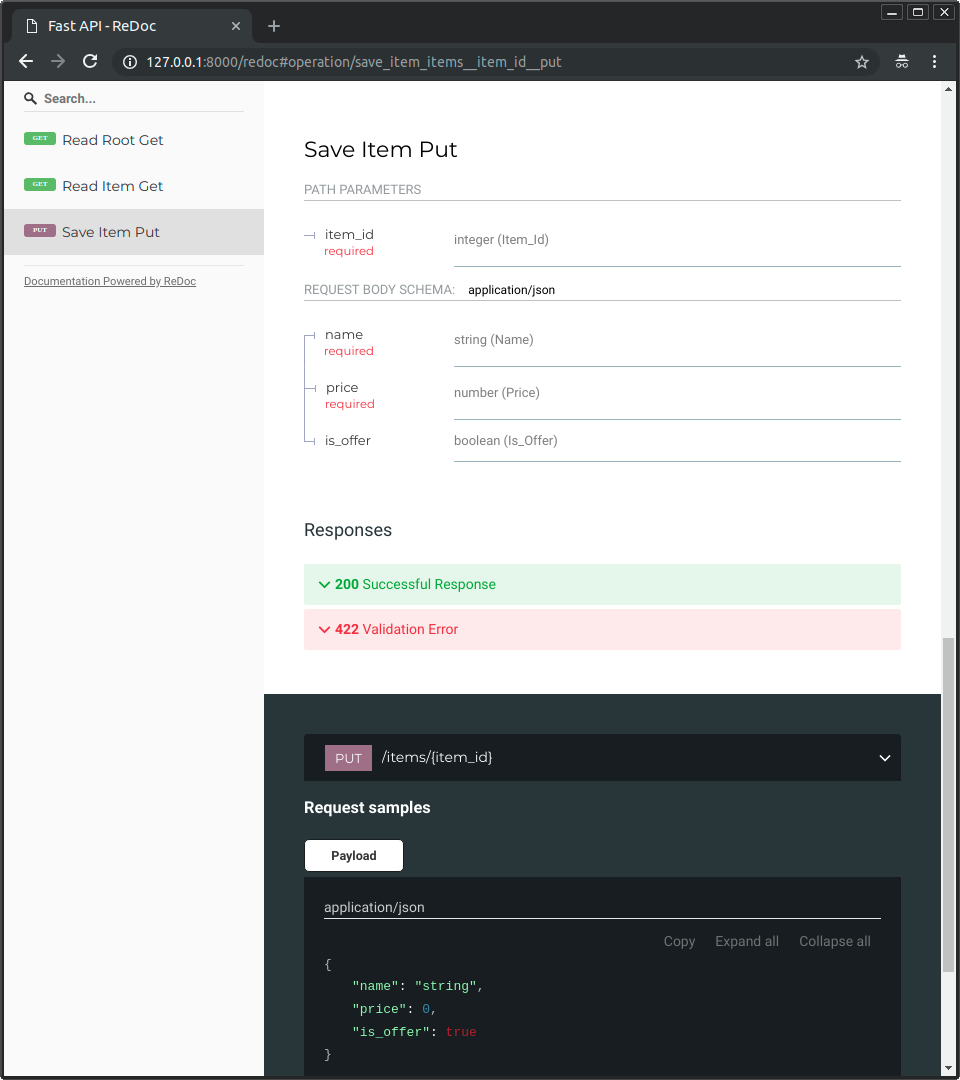 ### Sadece Modern Python { #just-modern-python } Her şey standart **Python type** deklarasyonlarına dayanır (Pydantic sayesinde). Öğrenilecek yeni bir söz dizimi yok. Sadece standart, modern Python.Created: Sun Apr 05 07:19:11 GMT 2026 - Last Modified: Fri Mar 20 07:53:17 GMT 2026 - 10.1K bytes - Click Count (0) -
docs/es/docs/tutorial/response-model.md
Cuando veas la documentación automática, puedes verificar que el modelo de entrada y el modelo de salida tendrán cada uno su propio JSON Schema:

<img src="/img/tutorial/response-model/image01.png">

Y ambos modelos se utilizarán para la documentación interactiva de la API:

<img src="/img/tutorial/response-model/image02.png">

## Otras Anotaciones de Tipos de Retorno { #other-return-type-annotations }
Created: Sun Apr 05 07:19:11 GMT 2026 - Last Modified: Thu Mar 19 18:15:55 GMT 2026 - 17.1K bytes - Click Count (0) -
docs/fr/docs/tutorial/response-model.md
Dans la documentation automatique, vous pouvez vérifier que le modèle d'entrée et le modèle de sortie auront chacun leur propre JSON Schema :

<img src="/img/tutorial/response-model/image01.png">

Et les deux modèles seront utilisés pour la documentation API interactive :

<img src="/img/tutorial/response-model/image02.png">

## Autres annotations de type de retour { #other-return-type-annotations }
Created: Sun Apr 05 07:19:11 GMT 2026 - Last Modified: Thu Mar 19 18:37:13 GMT 2026 - 18.1K bytes - Click Count (0) -
docs/pt/docs/tutorial/response-model.md
Quando você vê a documentação automática, pode verificar se o modelo de entrada e o modelo de saída terão seus próprios esquemas JSON: <img src="/img/tutorial/response-model/image01.png"> E ambos os modelos serão usados para a documentação interativa da API: <img src="/img/tutorial/response-model/image02.png"> ## Outras anotações de tipo de retorno { #other-return-type-annotations }
Created: Sun Apr 05 07:19:11 GMT 2026 - Last Modified: Thu Mar 19 18:20:43 GMT 2026 - 16.7K bytes - Click Count (0) -
docs/en/docs/tutorial/response-model.md
## See it in the docs { #see-it-in-the-docs }

When you see the automatic docs, you can check that the input model and output model will both have their own JSON Schema:

<img src="/img/tutorial/response-model/image01.png">

And both models will be used for the interactive API documentation:

<img src="/img/tutorial/response-model/image02.png">

## Other Return Type Annotations { #other-return-type-annotations }
Created: Sun Apr 05 07:19:11 GMT 2026 - Last Modified: Thu Mar 05 18:13:19 GMT 2026 - 15.5K bytes - Click Count (0)